
Adansonia digitata,
Malvaceae
Baobab
AKA: Monkey-bread Tree, Gorakhchinch
ORIGIN
Introduced
GEOGRAPHIC RANGE
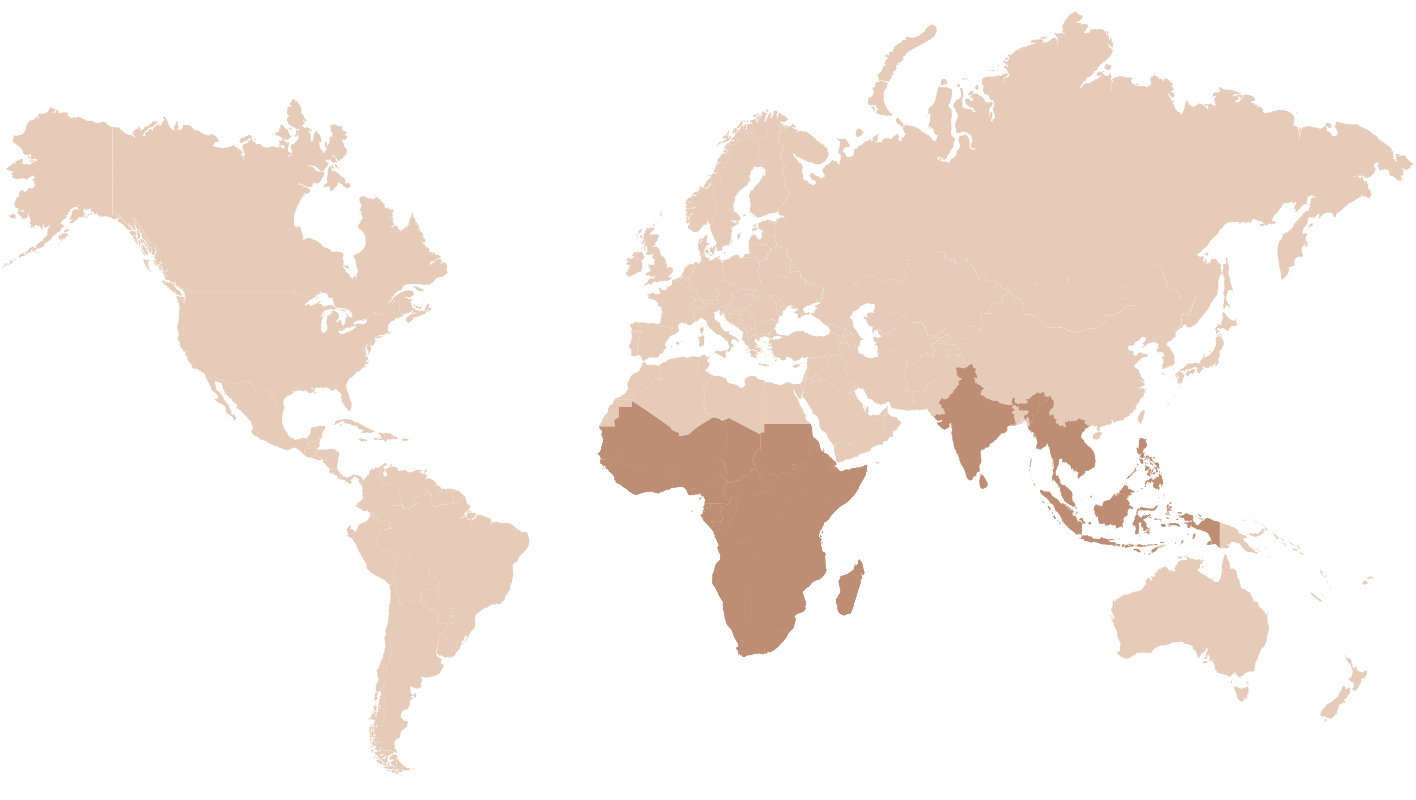
Native to mainland Africa, particularly across the savannas of sub-Saharan regions, the Baobab grows in West, East and Southern Africa, including Sudan, Senegal, Tanzania, Kenya, Botswana and South Africa. The species has been introduced and naturalized in India, Sri Lanka and parts of Southeast Asia, where it grows well in dry tropical conditions.
HEIGHT
10 - 14 m

CONSERVATION STATUS
Least Concern on the
IUCN Red List
IUCN RED LIST
Established in 1964, The IUCN Red List is a critical indicator of the health of the world’s biodiversity. Species are classified by the IUCN Red List into nine groups, through criteria such as rate of decline, population size and area of geographic distribution as:
- Extinct (EX) – This species is no longer extant
- Extinct in the wild (EW) – Survives only in captivity, or through cultivation often outside native range
- Critically endangered (CR) – In an extremely critical state
- Endangered (EN) – Very high risk of extinction in the wild
- Vulnerable (VU) – At high risk of unnatural (human-caused) extinction
- Near Threatened (NT) – Close to being endangered in the near future
- Least Concern (LC) – Widespread and abundant in the wild
- Data Deficient (DD) – Inadequate information to assess extinction risk
- Not Evaluated (NE) – Has not yet been assessed
ORIGIN
Introduced
HEIGHT
10 - 14 m
GEOGRAPHIC RANGE
Native to mainland Africa, particularly across the savannas of sub-Saharan regions, the Baobab grows in West, East and Southern Africa, including Sudan, Senegal, Tanzania, Kenya, Botswana and South Africa. The species has been introduced and naturalized in India, Sri Lanka and parts of Southeast Asia, where it grows well in dry tropical conditions.
CONSERVATION STATUS
Least Concern on the
IUCN Red List
BARK, FOLIAGE, FRUIT & FLOWER
Bark: Thick and fibrous, forming massive hollow trunks that are sometimes used by people as shelters, storage spaces or places of gathering.
Leaves: Palmately compound leaves, meaning several leaflets (usually five to seven) spread out from a single point. The leaves are shed during the dry season to reduce water loss.
Flowers & Fruit: Large, white, hanging flowers bloom for just one night and release a strong musky smell to attract bats and other nocturnal pollinators. The fruits are large, woody pods containing many seeds surrounded by dry, tangy, vitamin-rich pulp.
Leaves: Palmately compound leaves, meaning several leaflets (usually five to seven) spread out from a single point. The leaves are shed during the dry season to reduce water loss.
Flowers & Fruit: Large, white, hanging flowers bloom for just one night and release a strong musky smell to attract bats and other nocturnal pollinators. The fruits are large, woody pods containing many seeds surrounded by dry, tangy, vitamin-rich pulp.

GENERAL DESCRIPTION
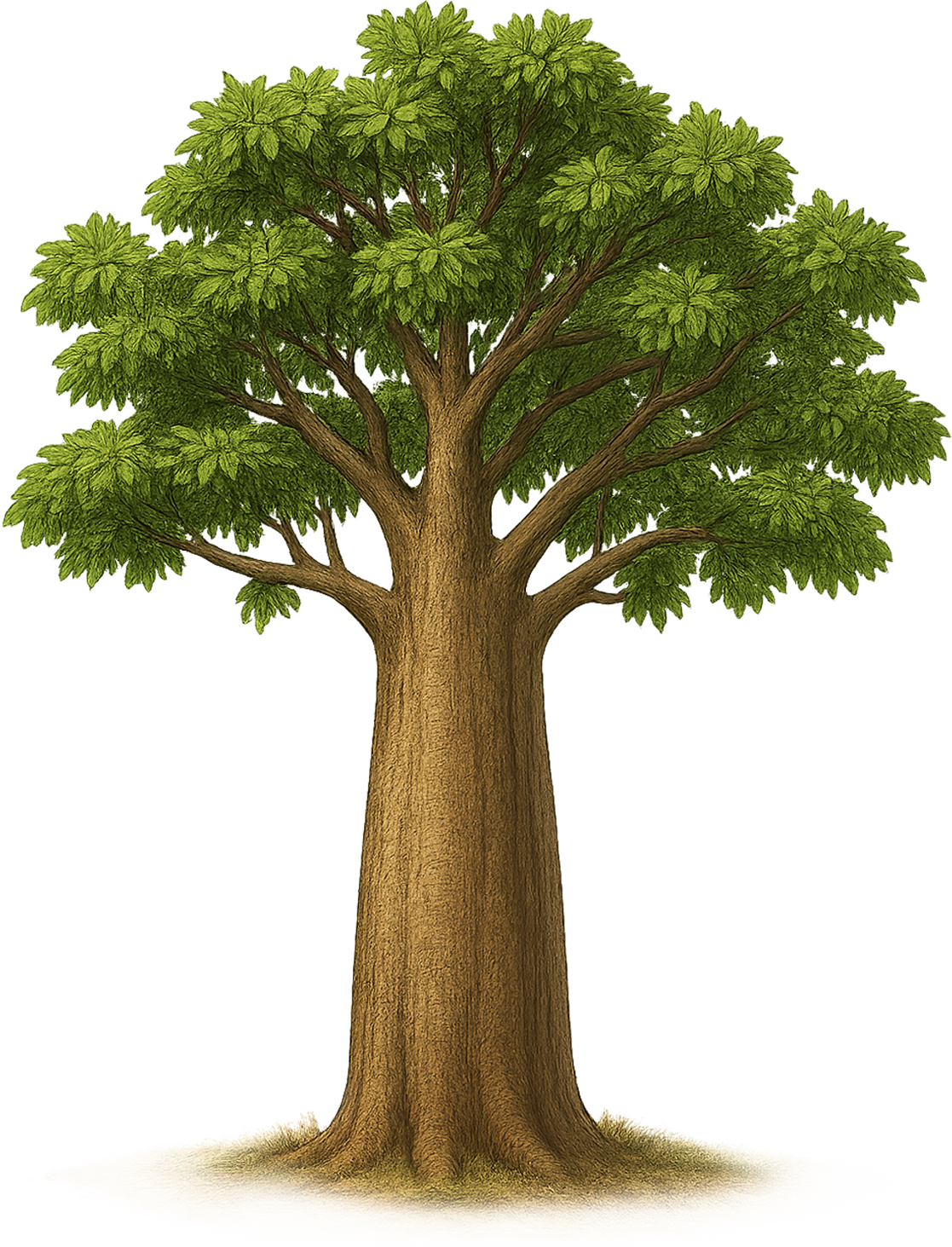
Commonly known as the African Baobab, Tree of Life or Upside-Down Tree, the Baobab is one of the most iconic trees of the African landscape, notable for its enormous, bottle-shaped trunk, which can reach up to 25 meters in girth and 20 to 30 meters in height. The tree's branches spread out like roots, giving it the famous "upside-down" appearance.
Read more
MEDICINAL USE
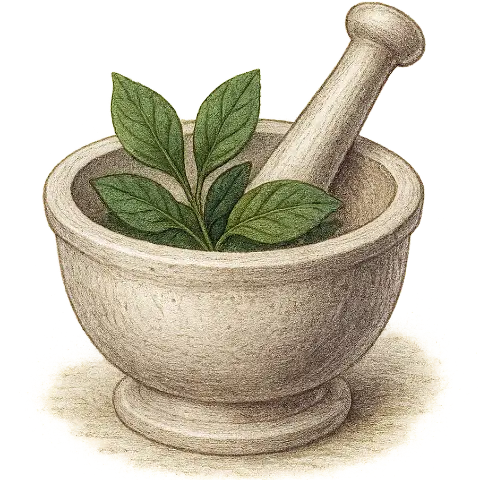
Every part of Baobab, bark, leaves, pulp, seeds and roots is used in traditional African and Ayurvedic medicine. The fruit pulp is rich in vitamin C, calcium and antioxidants, used to treat fevers, diarrhea and scurvy. Leaf extracts are used for anti-inflammatory, analgesic and antimicrobial purposes. The bark and roots are used to make tonics and poultices for treating malaria, toothache and gastrointestinal issues. The seed oil has emollient properties and is applied to the skin for moisturizing and wound healing.
Read more
ECOLOGICAL IMPORTANCE
The Baobab is often called the "Tree of Life" because it can store up to 120,000 liters of water in its trunk during the rainy season, which helps it survive severe droughts. It plays a vital ecological role, providing food and shelter for birds, bats, insects and mammals, while also enriching the soil with organic matter from its fallen leaves. It is also regarded as an indicator species for ecosystem health and an important ally in climate adaptation efforts.
Read more
CULTURAL SIGNIFICANCE
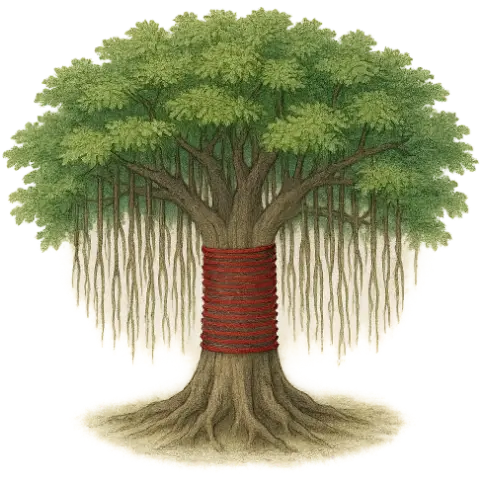
The Baobab holds deep cultural and spiritual importance in African traditions. It is often considered sacred, symbolizing life, wisdom and strength. In many African communities, it serves as a meeting place, with gatherings, rituals and storytelling sessions held under its shade. In regions of India, where it was introduced centuries ago, it is often found near temples and heritage sites, symbolizing longevity and resilience.
Read more
HABITAT
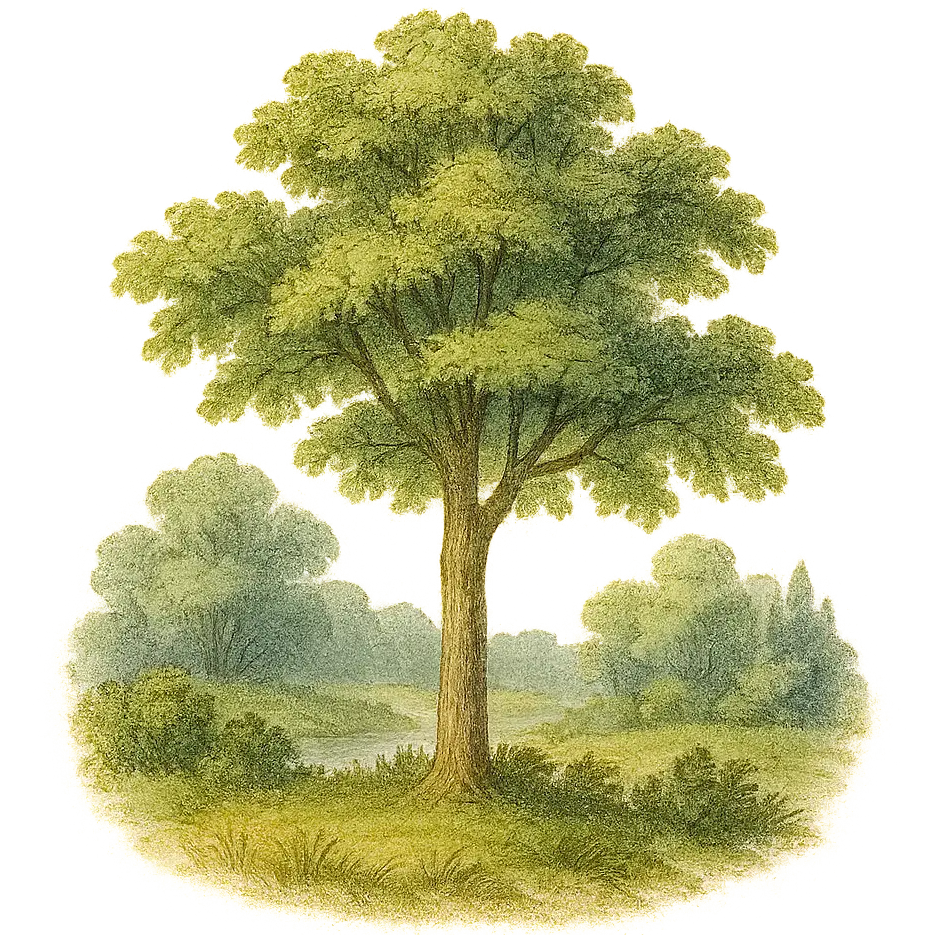
It thrives in semi-arid to sub-humid climates, preferring well-drained sandy or loamy soils and tolerating extreme drought. Because of its resilience and ecological benefits, it is often planted in villages, near water sources and in agricultural landscapes.
Read more

CULINARY USE
The Baobab is a traditional food plant in Africa. The fruit pulp is eaten raw or mixed into drinks, porridges and sauces, known for its tangy, citrus-like flavor. The seeds can be roasted as snacks or ground to produce baobab seed oil, used in cooking and cosmetics. Young leaves are cooked as vegetables or dried into powder for soups and sauces. In many African cultures, the fruit pulp is used to make traditional energy drinks and fermented beverages.
Read more

FOUND HERE
Tennis Court Garden
Read more

DO YOU KNOW?
Some Baobab trees are estimated to be over 2,000 years old, making them among the oldest living trees on Earth. Infact, their hollow trunks were sometimes used as homes, storage rooms, prisons or even chapels in African villages.


EARTH CHALLENGE
Why do Baobab flowers bloom only at night?