
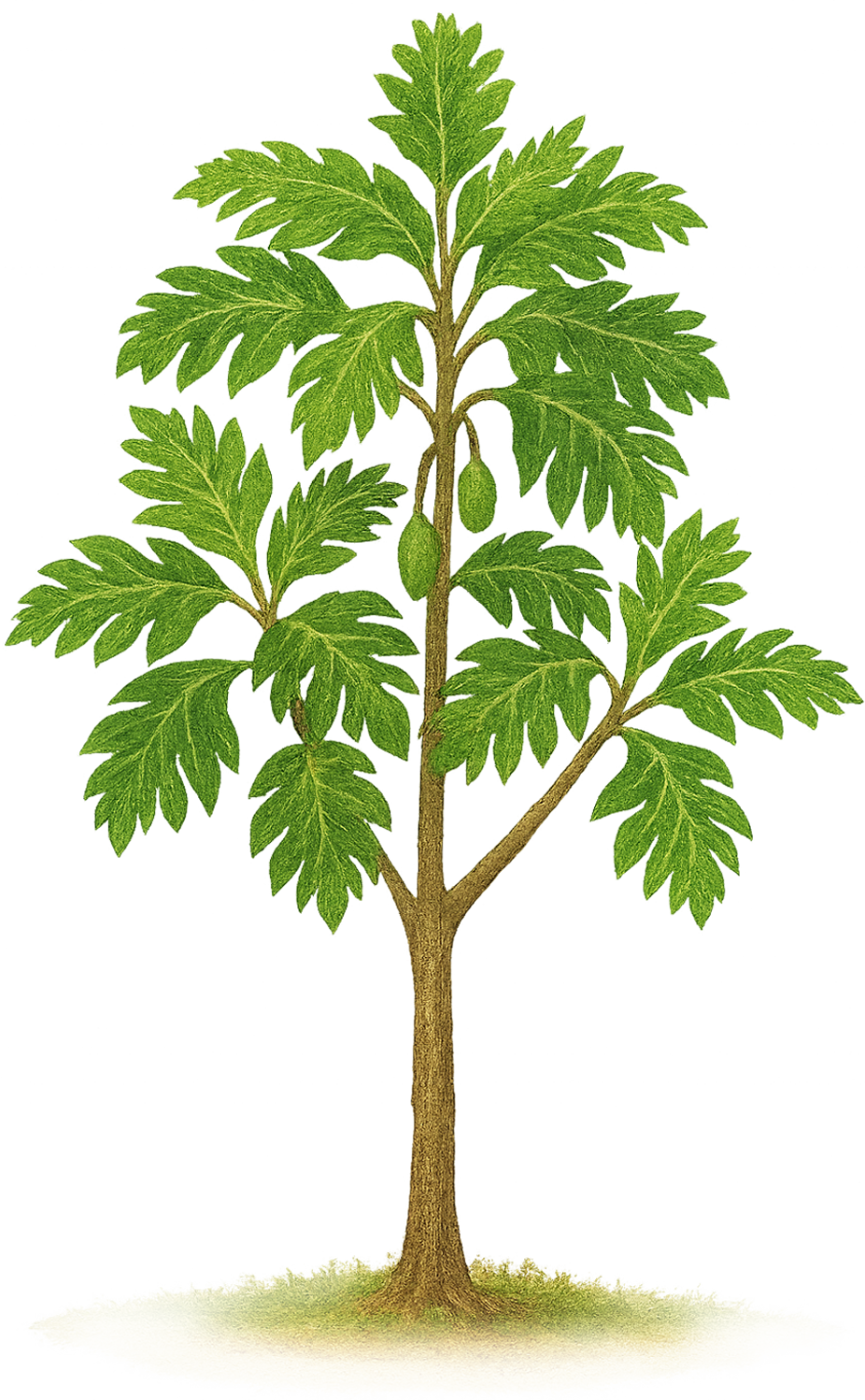
Artocarpus altilis,
Moraceae
Breadfruit
AKA: Neer Phanas
ORIGIN
Introduced
GEOGRAPHIC RANGE
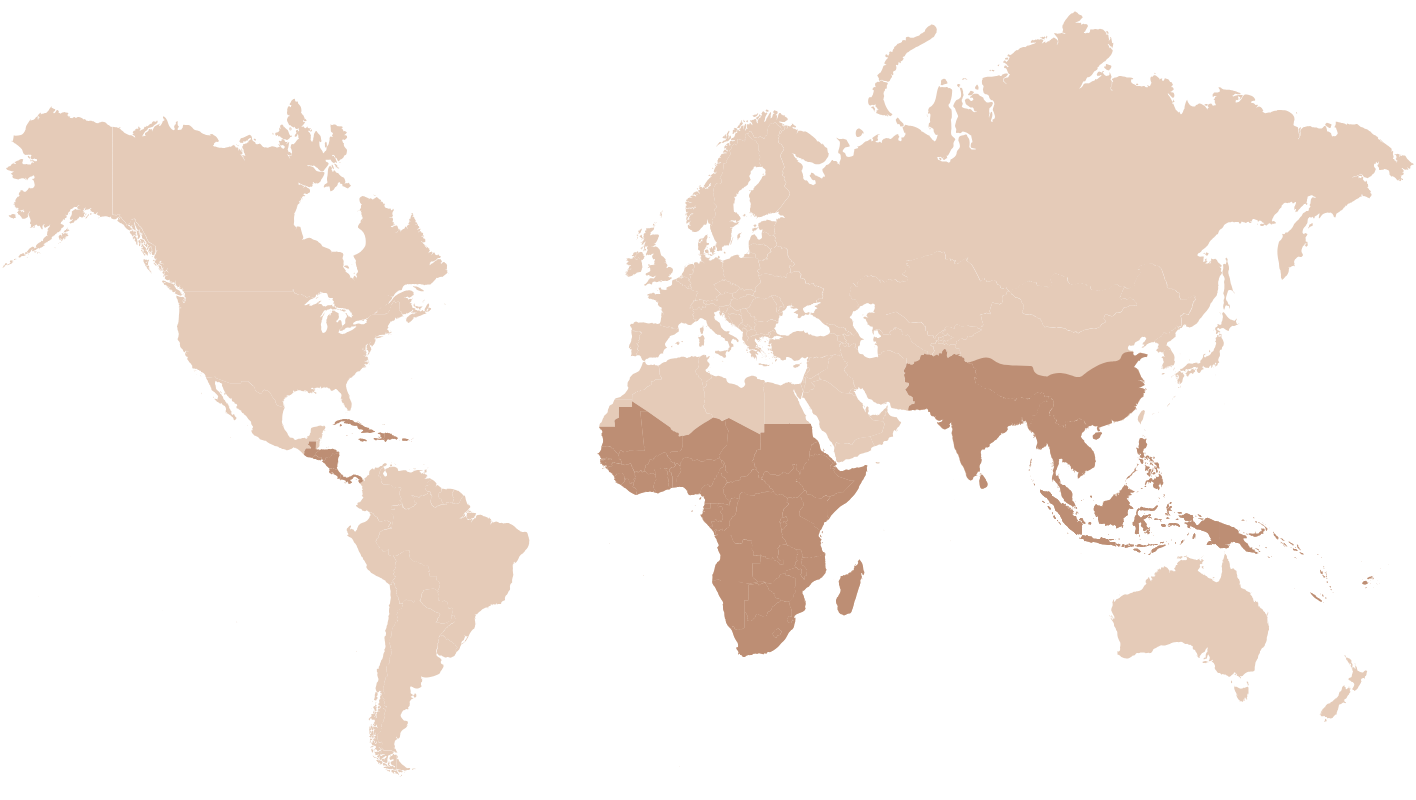
Breadfruit is native to New Guinea, the Philippines and the Indo-Malayan region, but it has been widely cultivated throughout the Pacific Islands, Southeast Asia, the Caribbean, Central America and tropical Africa.
HEIGHT
15 - 20 m

CONSERVATION STATUS
Least Concern on the
IUCN Red List
IUCN RED LIST
Established in 1964, The IUCN Red List is a critical indicator of the health of the world’s biodiversity. Species are classified by the IUCN Red List into nine groups, through criteria such as rate of decline, population size and area of geographic distribution as:
- Extinct (EX) – This species is no longer extant
- Extinct in the wild (EW) – Survives only in captivity, or through cultivation often outside native range
- Critically endangered (CR) – In an extremely critical state
- Endangered (EN) – Very high risk of extinction in the wild
- Vulnerable (VU) – At high risk of unnatural (human-caused) extinction
- Near Threatened (NT) – Close to being endangered in the near future
- Least Concern (LC) – Widespread and abundant in the wild
- Data Deficient (DD) – Inadequate information to assess extinction risk
- Not Evaluated (NE) – Has not yet been assessed
ORIGIN
Introduced
HEIGHT
15 - 20 m
GEOGRAPHIC RANGE
Breadfruit is native to New Guinea, the Philippines and the Indo-Malayan region, but it has been widely cultivated throughout the Pacific Islands, Southeast Asia, the Caribbean, Central America and tropical Africa.
CONSERVATION STATUS
Least Concern on the
IUCN Red List
BARK, FOLIAGE, FRUIT & FLOWER
Bark: Used in folk medicine and for general wellness remedies.
Leaves: Large leaves help reduce erosion and are used in herbal preparations.
Flowers & Fruit: Large starchy fruits; edible seeds in some varieties.
Leaves: Large leaves help reduce erosion and are used in herbal preparations.
Flowers & Fruit: Large starchy fruits; edible seeds in some varieties.

GENERAL DESCRIPTION
Breadfruit is a highly productive tropical tree grown mainly for its large, starchy fruits. It is widely cultivated across the tropics as an important food crop and multipurpose tree. The unripe fruit is rich in starch and forms a staple food, while the tree itself is valued for its easy cultivation and role in agroforestry systems that support long-term food security and environmental health.
Read more
MEDICINAL USE
The latex from the Breadfruit tree is used to treat skin ailments, fungal infections and minor wounds. Leaves may be used in herbal preparations for hypertension and inflammation. The bark and roots have been used in folk medicine for digestive support, pain relief and general wellness. Rich in fiber, vitamins and minerals, making it a beneficial food for maintaining gut health and boosting immunity.
Read more
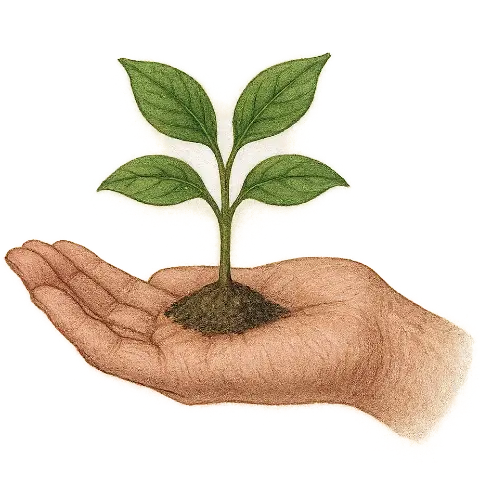
ECOLOGICAL IMPORTANCE
Breadfruit trees provide shade, reduce soil erosion, improve microclimates and support biodiversity. They are promoted as climate-resilient crops due to high yield and low maintenance capable of addressing food security in tropical regions.
Read more
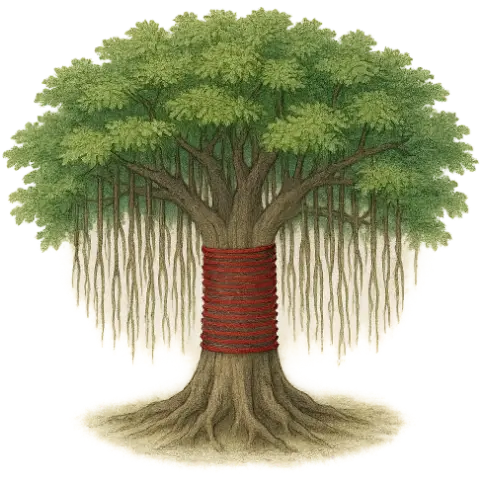
CULTURAL SIGNIFICANCE
Highly valued in Polynesian and Pacific cultures, where the tree symbolizes life, abundance and community. The famous HMS Bounty voyage was commissioned to transport Breadfruit from the Pacific to the Caribbean as a food source for plantations. Breadfruit wood is lightweight and resistant to termites, traditionally used in canoe building.
Read more
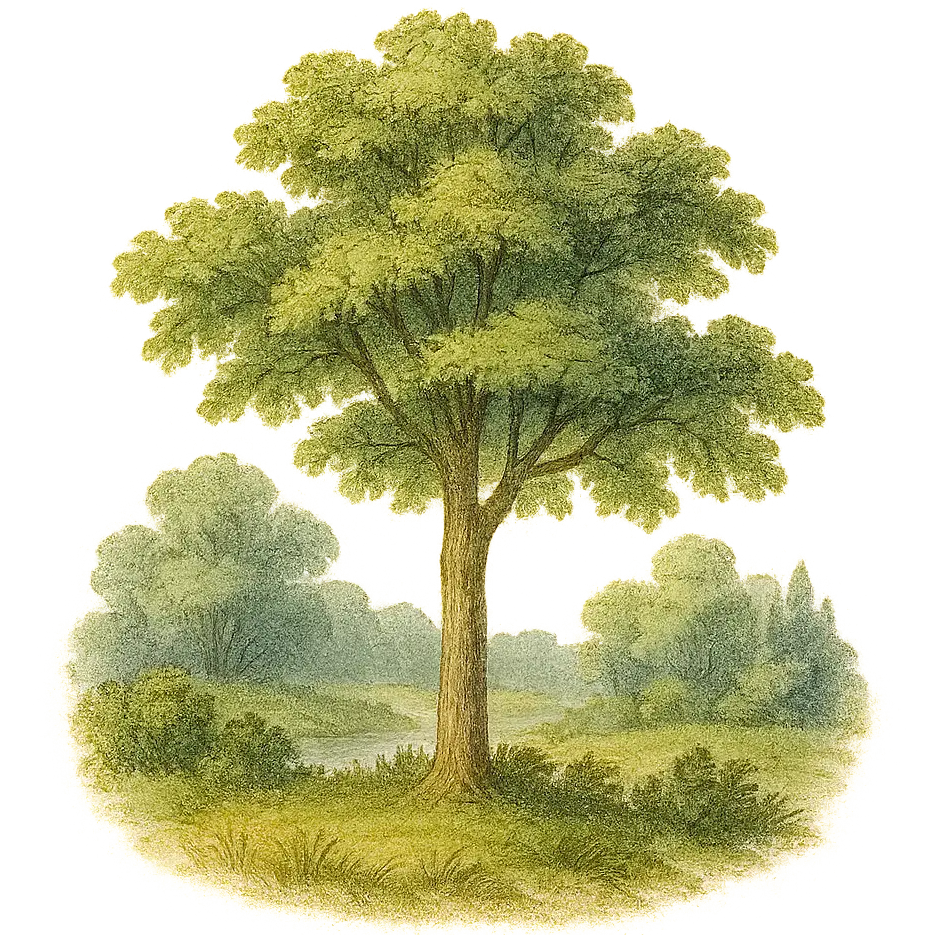
HABITAT
This tree thrives in warm, humid climates and grows best in lowland tropical areas with abundant rainfall.
Read more
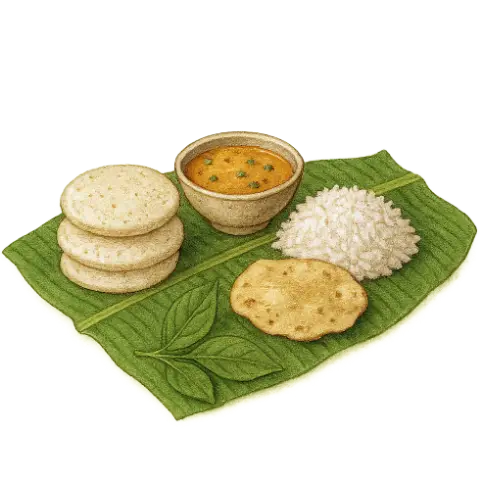
CULINARY USE
The fruit is a major starchy food source, often compared to potatoes. It can be boiled, baked, roasted, fried, steamed or mashed. When unripe, it is used as a vegetable, when ripe, it becomes sweeter and can be used in desserts. Seeds (in seeded varieties) are edible after roasting or boiling.
Read more

FOUND HERE
Kavesar Garden
Read more

DO YOU KNOW?
Cooked unripe Breadfruit tastes and feels like freshly baked bread, which is how the tree got its name. A single tree can produce 150 - 200 fruits annually, making it one of the most productive food plants per hectare in the world.


EARTH CHALLENGE
Why is Breadfruit considered important for food security?