
Calophylum innophyllum,
Calophyllaceae
Alexandrian Laurel
AKA: Undi, Tamanu
ORIGIN
Native
GEOGRAPHIC RANGE
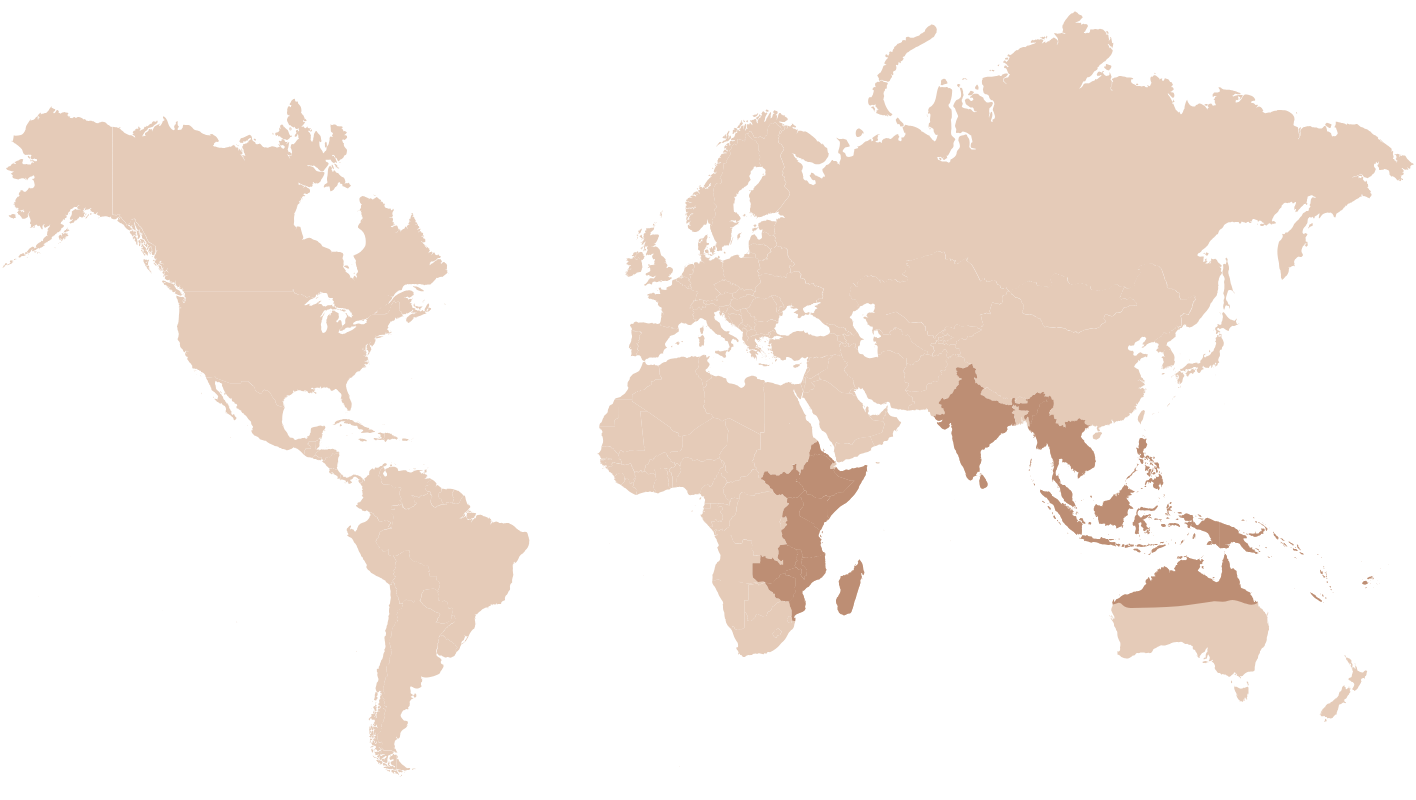
This tree is native to the Indian Ocean and Pacific regions, including India, Sri Lanka, Southeast Asia, Polynesia and Melanesia, Northern Australia and the coastal regions of East Africa.
HEIGHT
8 - 20 m

CONSERVATION STATUS
Least Concern on the
IUCN Red List
IUCN RED LIST
Established in 1964, The IUCN Red List is a critical indicator of the health of the world’s biodiversity. Species are classified by the IUCN Red List into nine groups, through criteria such as rate of decline, population size and area of geographic distribution as:
- Extinct (EX) – This species is no longer extant
- Extinct in the wild (EW) – Survives only in captivity, or through cultivation often outside native range
- Critically endangered (CR) – In an extremely critical state
- Endangered (EN) – Very high risk of extinction in the wild
- Vulnerable (VU) – At high risk of unnatural (human-caused) extinction
- Near Threatened (NT) – Close to being endangered in the near future
- Least Concern (LC) – Widespread and abundant in the wild
- Data Deficient (DD) – Inadequate information to assess extinction risk
- Not Evaluated (NE) – Has not yet been assessed
ORIGIN
Native
HEIGHT
8 - 20 m
GEOGRAPHIC RANGE
This tree is native to the Indian Ocean and Pacific regions, including India, Sri Lanka, Southeast Asia, Polynesia and Melanesia, Northern Australia and the coastal regions of East Africa.
CONSERVATION STATUS
Least Concern on the
IUCN Red List
BARK, FOLIAGE, FRUIT & FLOWER
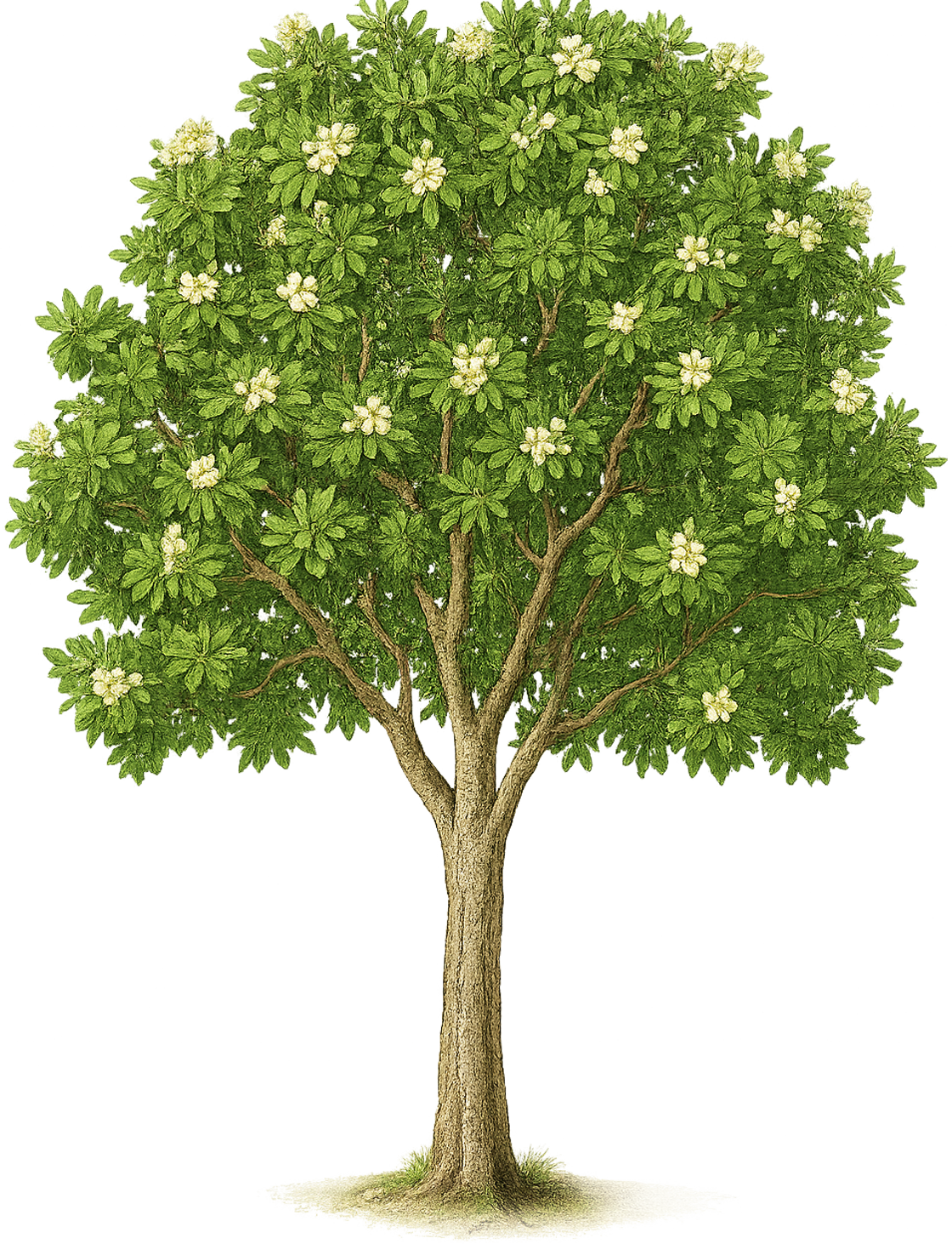
Bark: Used in traditional decoctions for ulcers, joint pain and eye infections.
Leaves: Thick, glossy and veined; used in medicinal preparations and valued for providing dense shade.
Flowers & Fruit: Fragrant white flowers in clusters; round fruits with oil-rich kernels used to produce tamanu oil.
Leaves: Thick, glossy and veined; used in medicinal preparations and valued for providing dense shade.
Flowers & Fruit: Fragrant white flowers in clusters; round fruits with oil-rich kernels used to produce tamanu oil.

GENERAL DESCRIPTION
Alexandrian Laurel is a large evergreen tree growing about 8 - 20 meters tall, with a dense, rounded crown and a thick, gnarled trunk. Its leaves are glossy, leathery and dark green, marked by distinctive pale veins that make them easy to recognize. The tree bears clusters of fragrant white flowers with yellow centers, adding to its ornamental appeal. Round fruits develop after flowering, each containing a single large kernel that yields tamanu oil, widely known for its skin-healing properties. The wood is durable and has traditionally been used for boats, carvings and sacred objects. Remarkably, the tree can thrive on coastal sites, even growing directly on coral sands.
Read more

MEDICINAL USE
The Alexandrian Laurel tree is highly valued for tamanu oil extracted from its seeds. This oil is traditionally used for wound healing, burns, scars, skin infections and conditions such as eczema and psoriasis. It shows anti-inflammatory, antimicrobial and antioxidant properties. Leaf and bark decoctions are used for rheumatism, ulcers, stomach ailments, eye infections and joint pain. Tamanu oil is also widely used in cosmetics, creams and soaps.
Read more
ECOLOGICAL IMPORTANCE
This tree plays an important role in coastal protection by stabilizing sandy soils and reducing shoreline erosion. Its dense canopy provides shade in coastal villages, while its flowers offer nectar for bees. The fruits are adapted for marine dispersal, helping the species spread naturally along shores and islands.
Read more
CULTURAL SIGNIFICANCE
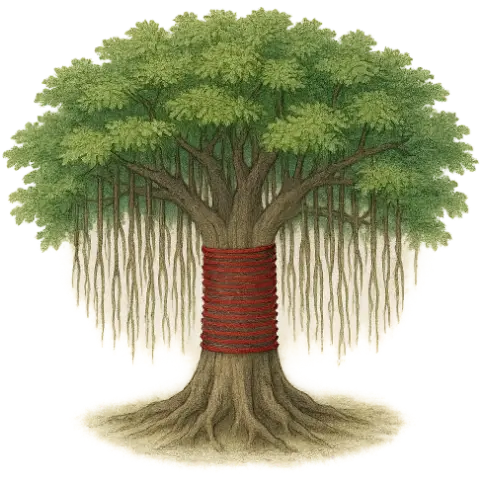
Considered sacred in South India, Sri Lanka, Polynesia and Southeast Asia, the Alexandrian Laurel tree is often planted near temples and shrines. Its fragrant flowers are used in garlands and ceremonies. Tamanu oil and the durable wood contribute to traditional crafts, rituals and community heritage.
Read more
HABITAT
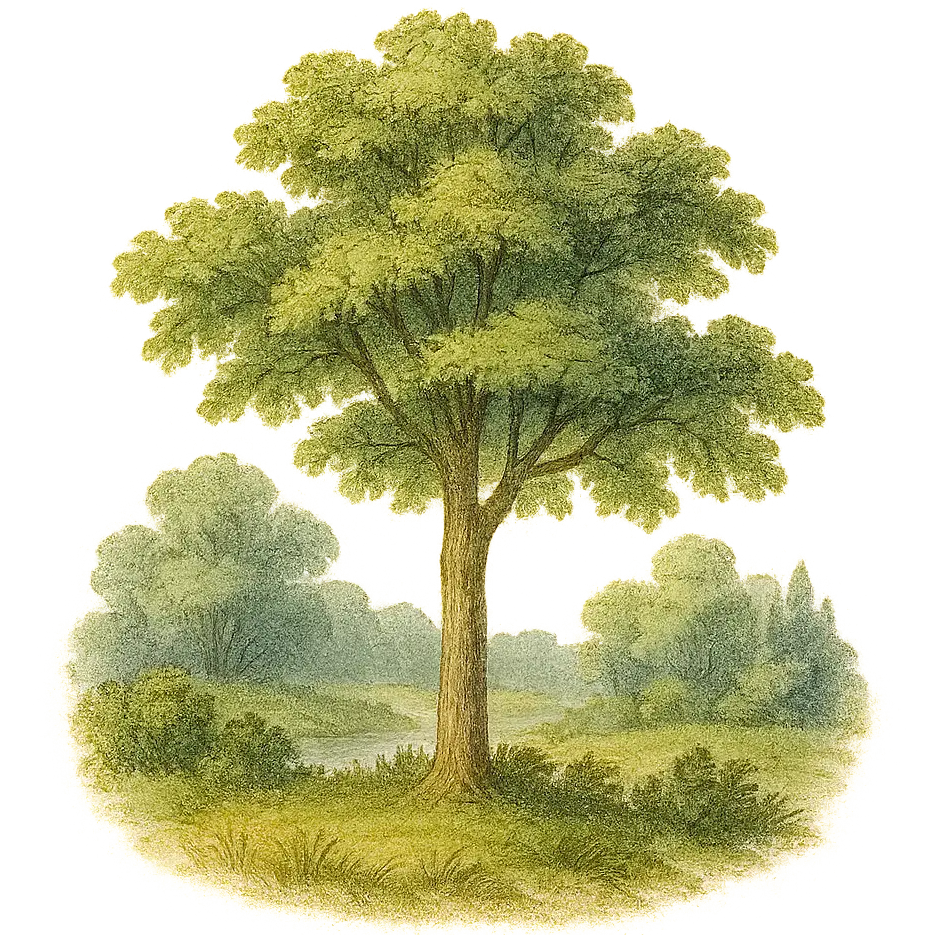
It thrives in tropical coastal areas, especially on sandy shores, coral flats and rocky beaches, showing strong tolerance to salt spray, wind and drought.
Read more

CULINARY USE
The Alexandrian Laurel fruits and seeds are not edible due to toxicity. Tamanu oil is used only for medicinal and cosmetic purposes and not for cooking.
Read more

FOUND HERE
Villa Royal
Read more

DO YOU KNOW?
Alexandrian Laurel is one of the few trees capable of growing on coral sands, making it especially valuable along tropical coastlines.


EARTH CHALLENGE
What makes Alexandrian Laurel especially valuable in traditional medicine?