
Ficus benghalensis,
Moraceae
Banyan Tree
AKA: Vad
ORIGIN
Native
GEOGRAPHIC RANGE
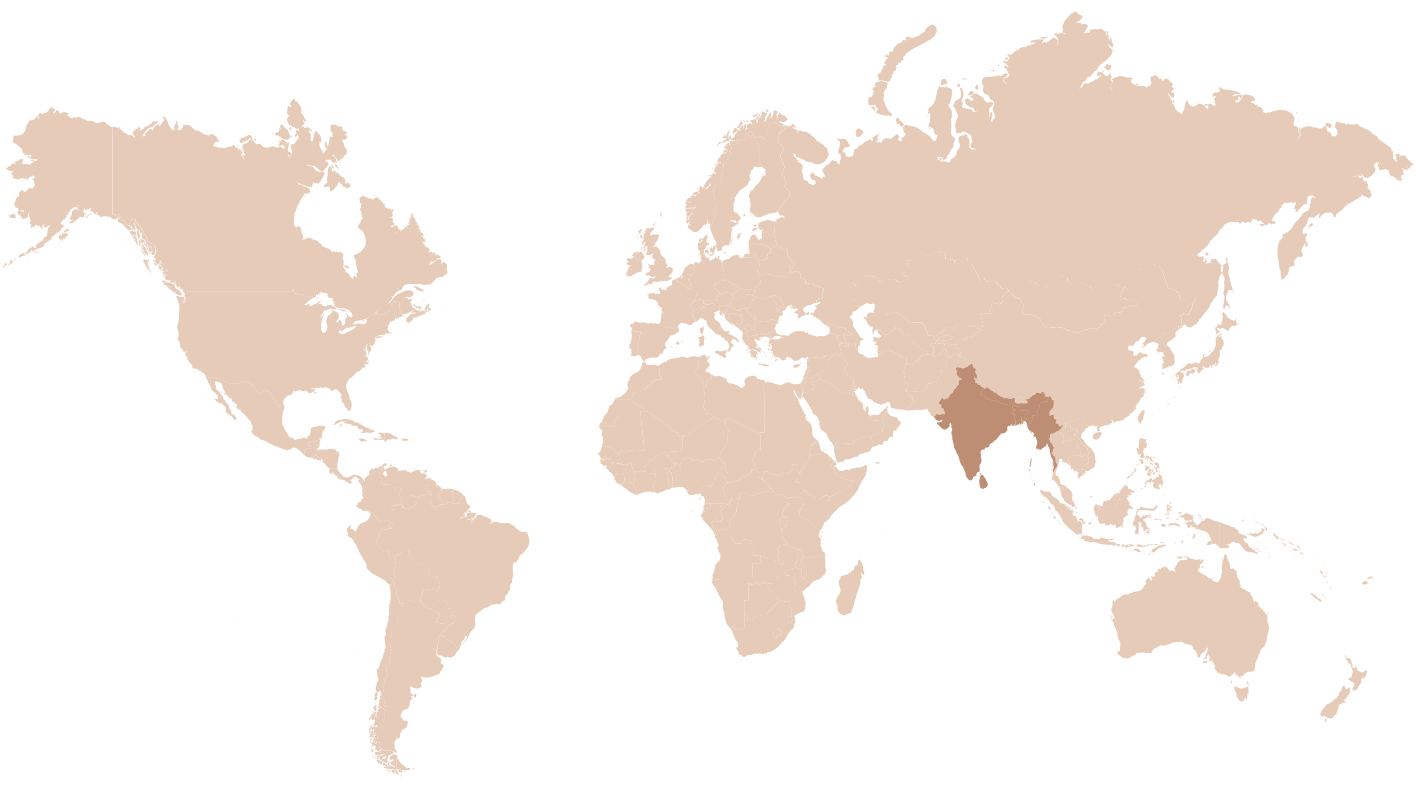
The Banyan tree is native to the Indian subcontinent, gowing in India, Bangladesh, Sri Lanka, Nepal and Myanmar.
HEIGHT
20 - 30 m

CONSERVATION STATUS
Least Concern on the
IUCN Red List
IUCN RED LIST
Established in 1964, The IUCN Red List is a critical indicator of the health of the world’s biodiversity. Species are classified by the IUCN Red List into nine groups, through criteria such as rate of decline, population size and area of geographic distribution as:
- Extinct (EX) – This species is no longer extant
- Extinct in the wild (EW) – Survives only in captivity, or through cultivation often outside native range
- Critically endangered (CR) – In an extremely critical state
- Endangered (EN) – Very high risk of extinction in the wild
- Vulnerable (VU) – At high risk of unnatural (human-caused) extinction
- Near Threatened (NT) – Close to being endangered in the near future
- Least Concern (LC) – Widespread and abundant in the wild
- Data Deficient (DD) – Inadequate information to assess extinction risk
- Not Evaluated (NE) – Has not yet been assessed
ORIGIN
Native
HEIGHT
20 - 30 m
GEOGRAPHIC RANGE
The Banyan tree is native to the Indian subcontinent, gowing in India, Bangladesh, Sri Lanka, Nepal and Myanmar.
CONSERVATION STATUS
Least Concern on the
IUCN Red List
BARK, FOLIAGE, FRUIT & FLOWER
Bark: Thick and astringent; widely used in traditional medicine.
Leaves: Large and leathery; used for poultices and medicinal preparations.
Flowers & Fruit: Tiny flowers enclosed within figs; figs ripen from green to red and feed many wildlife species.
Leaves: Large and leathery; used for poultices and medicinal preparations.
Flowers & Fruit: Tiny flowers enclosed within figs; figs ripen from green to red and feed many wildlife species.

GENERAL DESCRIPTION
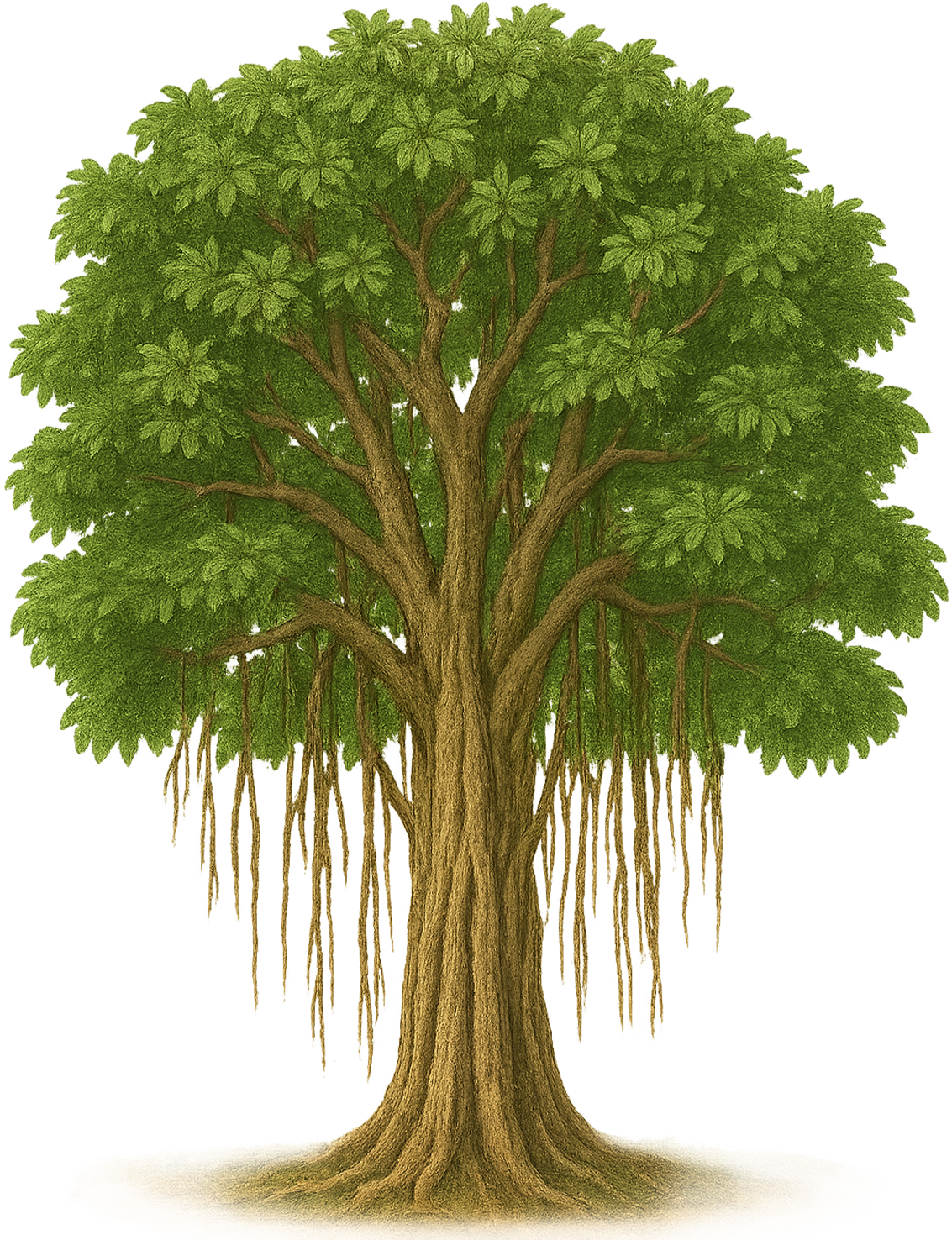
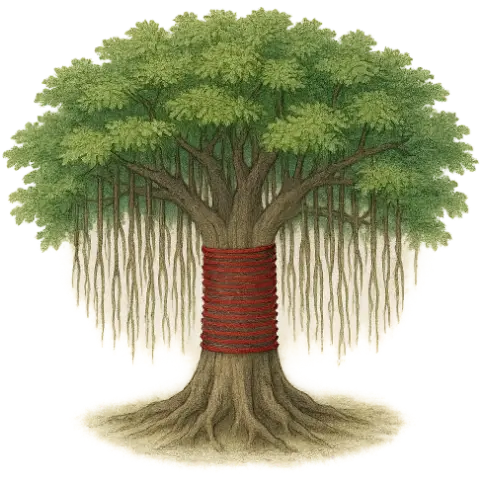
Banyan Tree is a massive evergreen fig tree best known for its remarkable aerial prop roots that grow down from its branches and thicken into woody trunks. This allows the tree to spread outward over a very large area, often forming a structure that looks like a forest made of many connected trunks. Mature trees usually reach 20 - 30 meters in height, while their crown can spread across hundreds of meters. The leaves are large, leathery and glossy green. Small, round figs develop on the tree and change from green to red as they ripen.
Read more

MEDICINAL USE
In Ayurveda, Siddha and folk medicine, the bark is used as an astringent to treat diabetes, skin diseases and inflammation. Leaves are applied as poultices for wounds, ulcers and joint pain. Latex is used for cracked heels, toothache and skin infections. Fruits are used as a mild laxative and aerial roots are used in traditional remedies for gynecological disorders.
Read more
ECOLOGICAL IMPORTANCE
Banyan Tree is a keystone species that supports a complex ecosystem of birds, bats, insects, epiphytes and small animals. Its figs provide food for wildlife, while the vast canopy creates cool, shaded habitats beneath. The extensive root system stabilizes soil and helps maintain landscape balance. Due to its huge biomass, the tree also acts as an important carbon sink.
Read more
CULTURAL SIGNIFICANCE
Highly revered in Hindu culture, the Banyan Tree symbolizes eternity, stability and immortality. It is sacred to deities such as Lord Shiva and Lord Vishnu and is central to rituals like Vat Savitri and Bargad Puja. Often planted near temples and village squares, it serves as a place for gatherings, worship and community life.
Read more
HABITAT
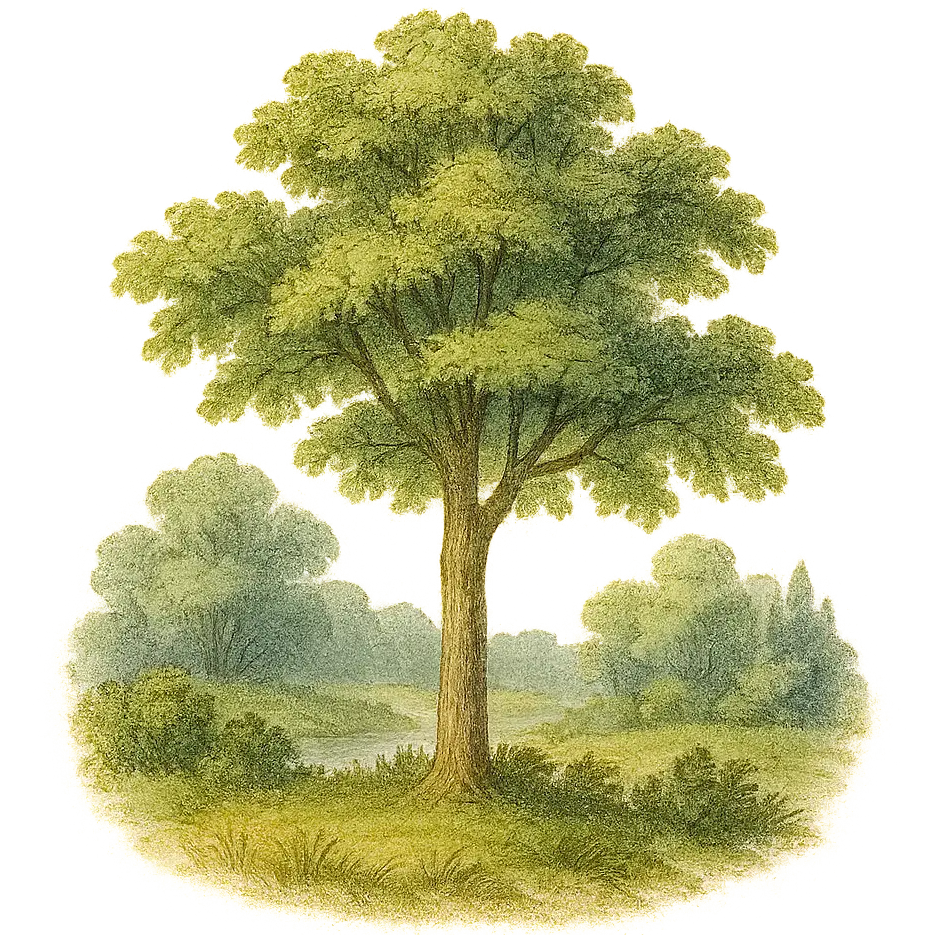
The Banyan tree thrives in tropical and subtropical regions, plains and foothills, moist and dry deciduous forests as well as in urban landscapes, village squares and temple premises.
Read more

CULINARY USE
The Banyan Tree fruit, or figs are not commonly eaten but may be consumed locally when ripe. Tender leaves are sometimes included in medicinal food preparations rather than regular diets.
Read more

FOUND HERE
Kavesar Garden
Read more

DO YOU KNOW?
The Banyan Tree is the National Tree of India and the famous Great Banyan in Kolkata spreads over more than three acres, resembling a natural forest.


EARTH CHALLENGE
What allows the Banyan Tree to spread over such a large area?