
Ficus racemosa,
Moraceae
Cluster Fig
AKA: Umbar, Audumbar, Gular
ORIGIN
Native
GEOGRAPHIC RANGE
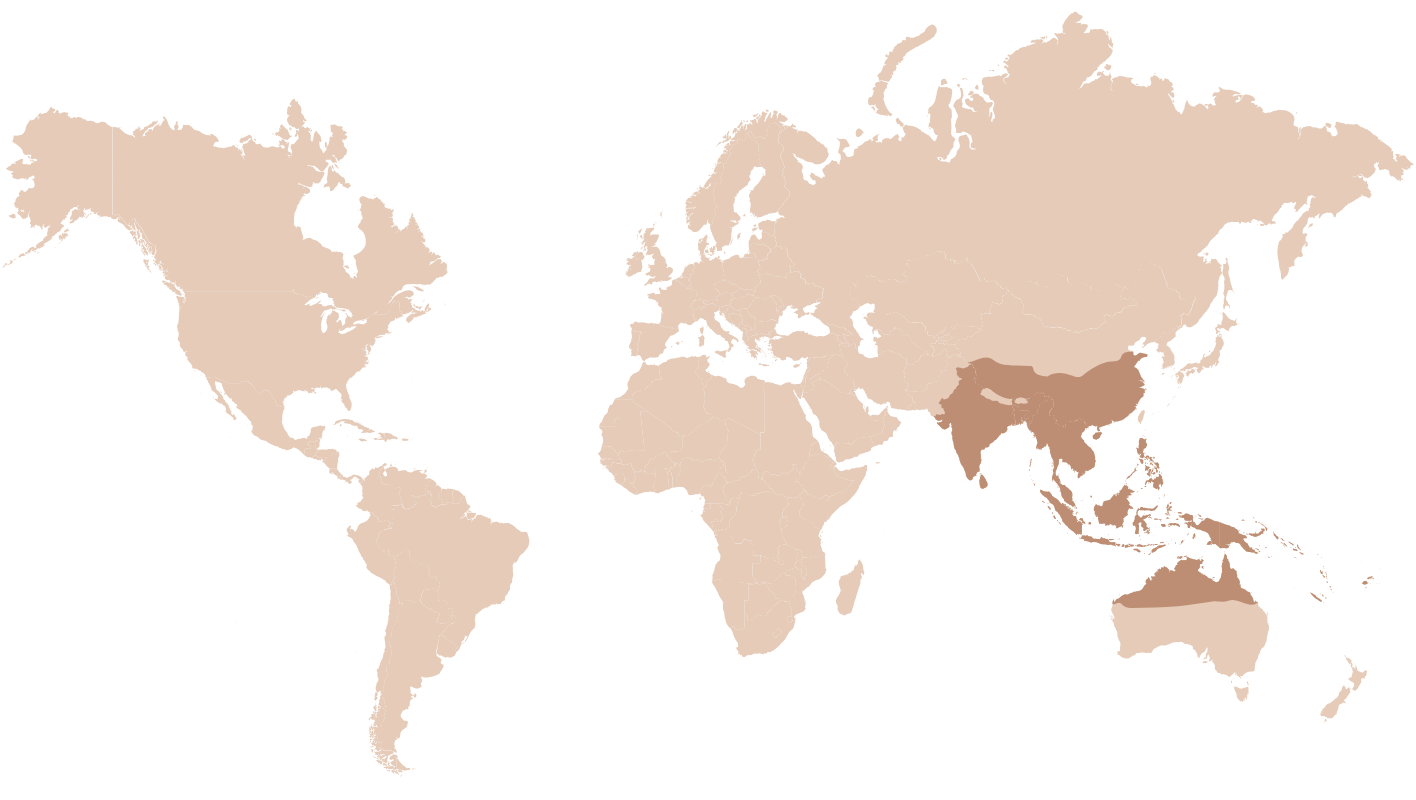
Native to India, Sri Lanka, Bangladesh and Southeast Asia, the Cluster Fig is widely distributed throughout the tropical and subtropical regions of Asia, Australia and the Pacific Islands.

HEIGHT
15 - 20 m

CONSERVATION STATUS
Least Concern on the
IUCN Red List
IUCN RED LIST
Established in 1964, The IUCN Red List is a critical indicator of the health of the world’s biodiversity. Species are classified by the IUCN Red List into nine groups, through criteria such as rate of decline, population size and area of geographic distribution as:
- Extinct (EX) – This species is no longer extant
- Extinct in the wild (EW) – Survives only in captivity, or through cultivation often outside native range
- Critically endangered (CR) – In an extremely critical state
- Endangered (EN) – Very high risk of extinction in the wild
- Vulnerable (VU) – At high risk of unnatural (human-caused) extinction
- Near Threatened (NT) – Close to being endangered in the near future
- Least Concern (LC) – Widespread and abundant in the wild
- Data Deficient (DD) – Inadequate information to assess extinction risk
- Not Evaluated (NE) – Has not yet been assessed
ORIGIN
Native
HEIGHT
15 - 20 m

GEOGRAPHIC RANGE
Native to India, Sri Lanka, Bangladesh and Southeast Asia, the Cluster Fig is widely distributed throughout the tropical and subtropical regions of Asia, Australia and the Pacific Islands.
CONSERVATION STATUS
Least Concern on the
IUCN Red List
BARK, FOLIAGE, FRUIT & FLOWER
Bark: Smooth to flaky; used in medicinal decoctions for digestive and metabolic disorders.
Leaves: Oval and leathery; provide shade and are used as fodder and in traditional remedies.
Flowers & Fruit: Tiny flowers develop inside figs; clustered fruits grow on the trunk, ripen from green to reddish-purple and feed a wide range of animals.
Leaves: Oval and leathery; provide shade and are used as fodder and in traditional remedies.
Flowers & Fruit: Tiny flowers develop inside figs; clustered fruits grow on the trunk, ripen from green to reddish-purple and feed a wide range of animals.

GENERAL DESCRIPTION
Cluster Fig is a large deciduous tree growing about 15 - 20 meters tall, with a wide-spreading crown and smooth greyish bark that becomes flaky as the tree matures. Its most distinctive feature is cauliflory, where the fig fruits grow in dense clusters directly from the trunk and main branches rather than from twigs. The leaves are oval, leathery and arranged to form a broad canopy. The figs are green when unripe and gradually turn reddish to purple as they ripen. Tiny flowers develop inside the figs and are pollinated by specific fig wasps, with which the tree shares a close ecological relationship. The soft, light-coloured wood is sometimes used for packing boxes and simple agricultural tools.
Read more

MEDICINAL USE
Highly valued in Ayurvedic, Siddha and Unani medicine, almost every part of the Cluster Fig is used. Bark decoctions treat diabetes, diarrhea, dysentery and ulcers due to their astringent and anti-inflammatory properties. Fruits act as digestive tonics, while unripe figs help manage stomach disorders. Latex is applied externally to wounds, cuts and insect bites. Scientific studies note antioxidant, antimicrobial and blood sugar - regulating properties.
Read more
ECOLOGICAL IMPORTANCE
This tree is a keystone species, providing a near year-round food supply for birds, bats, monkeys, insects and other wildlife. Its unique relationship with fig wasps is essential for pollination and seed production. Commonly found near rivers and streams, it helps stabilize soil and prevent erosion, supporting forest regeneration and healthy riparian ecosystems.
Read more

CULTURAL SIGNIFICANCE
Known as Udumbara in ancient texts, the tree is mentioned in the Rig Veda and Buddhist scriptures. In Hinduism, it is sacred to Lord Dattatreya and Lord Vishnu, while in Buddhism it symbolizes fertility, prosperity and wisdom. Because of its cultural reverence and ecological importance, it is often protected in sacred groves and conservation programs.
Read more

HABITAT
This tree will thrive in well-drained, alluvial soils and humid climates up to 1,200 m elevation. Cluster Fig is often planted near temples, along roadsides and at the edge of agricultural fields for shade and spiritual purposes.
Read more

CULINARY USE
Ripe figs are edible and mildly sweet, eaten fresh or dried. Young, unripe fruits are cooked as vegetables in some rural cuisines of India and Sri Lanka. Leaves and fruits are also used as fodder and the figs form an important food source for wildlife.
Read more

FOUND HERE
Kavesar Garden
Read more

DO YOU KNOW?
Cluster Fig is often called the "Wildlife Cafe" because its figs attract and feed dozens of species of birds, bats and mammals throughout the year.


EARTH CHALLENGE
What makes the Cluster Fig tree ecologically unique?