
Hyophorbe indica,
Arecaceae
Champagne Palm
AKA: Indian Bottle Palm
ORIGIN
Introduced
GEOGRAPHIC RANGE
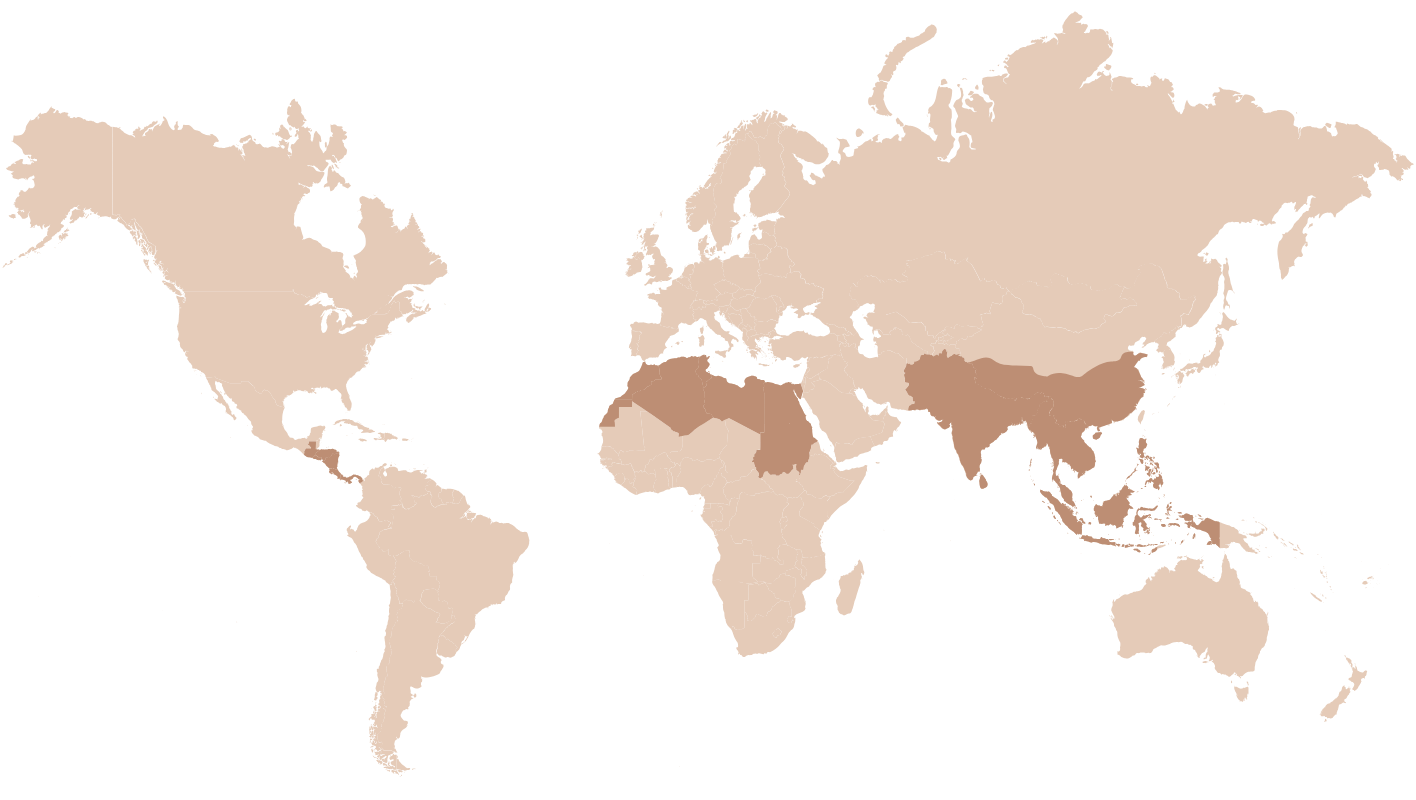
Endemic to the Mascarene Islands, the Champagne Palm is highly threatened due to habitat loss and invasive species. While endangered in the wild, it is cultivated in tropical and subtropical regions across the world.
HEIGHT
upto 10 m

CONSERVATION STATUS
Endangered on the
IUCN Red List
IUCN RED LIST
Established in 1964, The IUCN Red List is a critical indicator of the health of the world’s biodiversity. Species are classified by the IUCN Red List into nine groups, through criteria such as rate of decline, population size and area of geographic distribution as:
- Extinct (EX) – This species is no longer extant
- Extinct in the wild (EW) – Survives only in captivity, or through cultivation often outside native range
- Critically endangered (CR) – In an extremely critical state
- Endangered (EN) – Very high risk of extinction in the wild
- Vulnerable (VU) – At high risk of unnatural (human-caused) extinction
- Near Threatened (NT) – Close to being endangered in the near future
- Least Concern (LC) – Widespread and abundant in the wild
- Data Deficient (DD) – Inadequate information to assess extinction risk
- Not Evaluated (NE) – Has not yet been assessed
ORIGIN
Introduced
HEIGHT
upto 10 m
GEOGRAPHIC RANGE
Endemic to the Mascarene Islands, the Champagne Palm is highly threatened due to habitat loss and invasive species. While endangered in the wild, it is cultivated in tropical and subtropical regions across the world.
CONSERVATION STATUS
Endangered on the
IUCN Red List
BARK, FOLIAGE, FRUIT & FLOWER
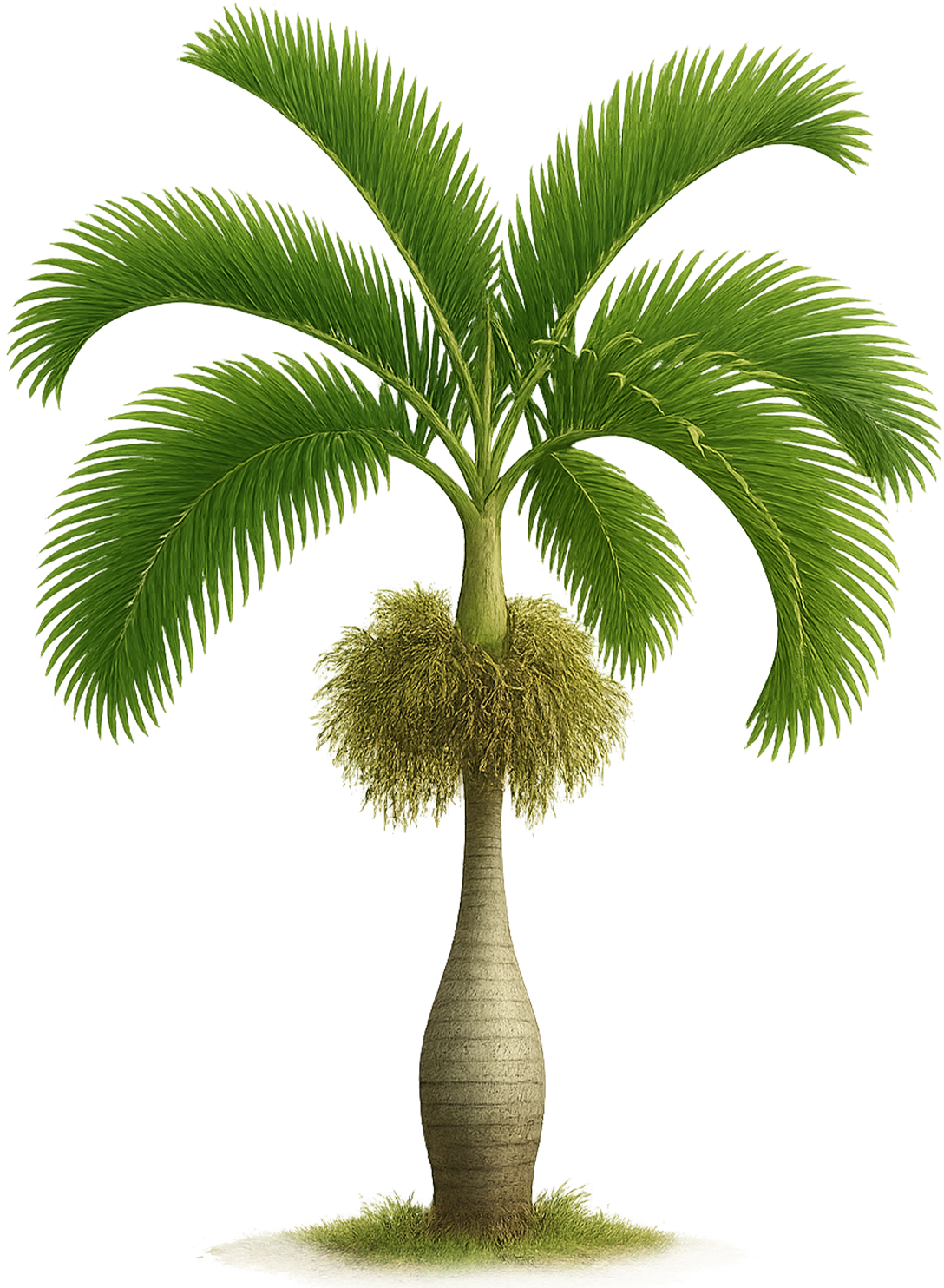
Bark (Trunk): Slender and grey, marked with distinct leaf scars, giving the palm a clean appearance.
Leaves: Pinnate, gracefully arching, forming a compact and elegant crown.
Flowers & Fruit: Small yellowish flowers bloom below the crownshaft; oval fruits ripen from green to orange-red and are non-edible.
Leaves: Pinnate, gracefully arching, forming a compact and elegant crown.
Flowers & Fruit: Small yellowish flowers bloom below the crownshaft; oval fruits ripen from green to orange-red and are non-edible.

GENERAL DESCRIPTION
Champagne Palm is a small to medium-sized palm growing about 6 - 10 meters tall, with a slender grey trunk marked by clear leaf scars. The crown is formed by gracefully arching, feather-like (pinnate) leaves and a smooth, pale-green crownshaft that gives the palm a neat, elegant appearance. Clusters of small yellowish flowers emerge just below the crownshaft, followed by oval fruits that turn orange to red when ripe. The common name "Palmiste Poison" comes from reports that parts of the plant may be toxic, particularly to livestock. Closely related to the Bottle Palm, this species is admired mainly for its refined form and rarity.
Read more
MEDICINAL USE
There are no known traditional medicinal uses for this palm. It is not commonly used in herbal medicine.
Read more
ECOLOGICAL IMPORTANCE
Although not a major forest species, the palm contributes to island ecosystems by providing shelter for insects and small fauna. Its cultivation in gardens and parks helps conserve genetic stock and reduces pressure on remaining wild populations.
Read more
CULTURAL SIGNIFICANCE
Native to the Mascarene Islands, Champagne Palm is part of the region's unique botanical heritage. Its rarity has made it an important symbol of plant conservation. Botanical gardens and conservation organizations cultivate it to protect the species and it is widely valued as an ornamental palm in tropical landscapes.
Read more
HABITAT
This palm thrives in moist well drained soil and tropical climates, growing well in both full sun and full shade.
Read more
CULINARY USE
The fruits are not edible and the species has no known culinary applications.
Read more
FOUND HERE
Tennis Court Garden
Read more

DO YOU KNOW?
Champagne Palm was once close to extinction in the wild, with only a few known individuals, leading to focused conservation efforts to save the species.
EARTH CHALLENGE
Why is Champagne Palm considered important today?