
Lagerstroemia speciosa,
Lythraceae
Queen of Flowers
AKA: Pride of India, Taman
ORIGIN
Native
GEOGRAPHIC RANGE
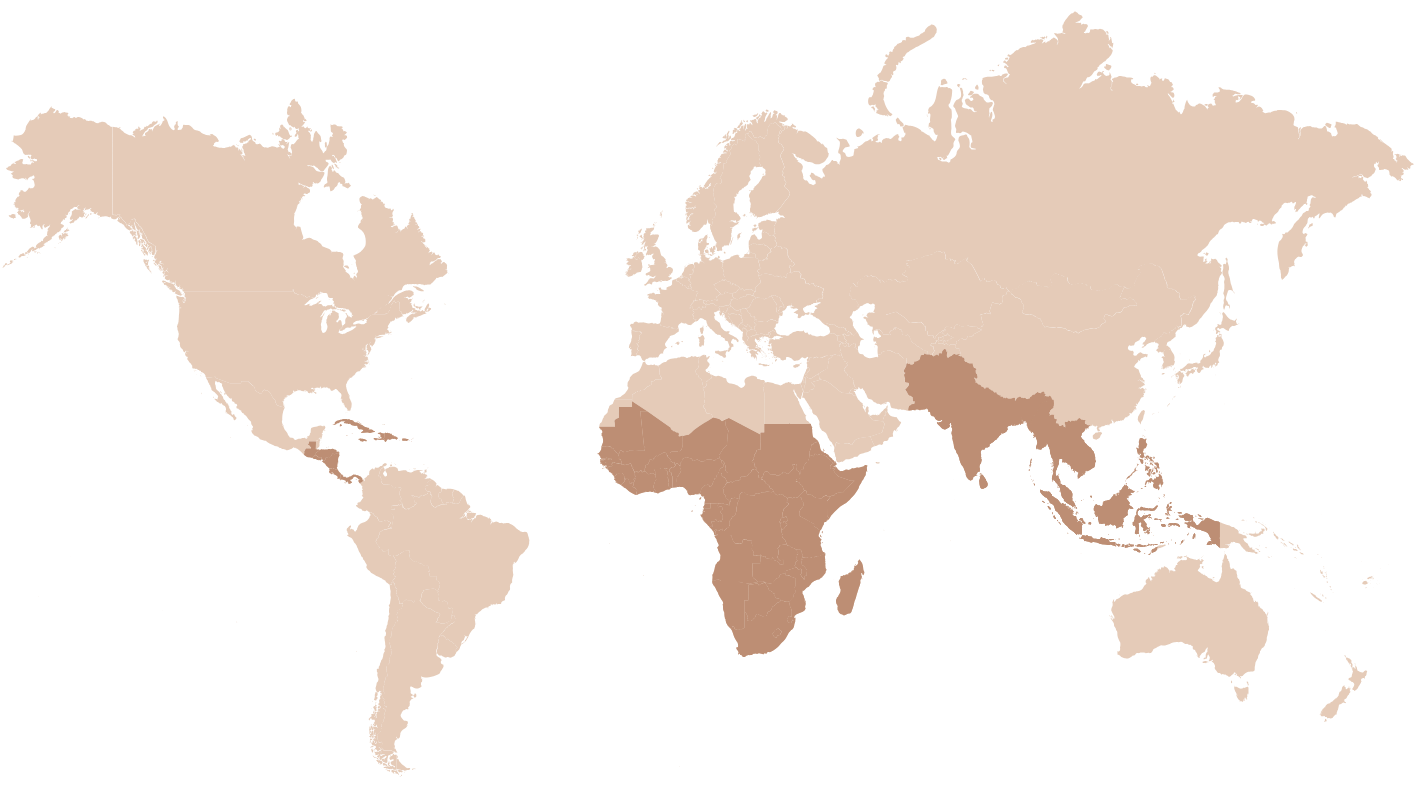
Queen of Flowers is native to tropical South and Southeast Asia, including India, Bangladesh, Sri Lanka, Myanmar, Thailand, Laos, Cambodia, Vietnam, Malaysia, the Philippines and Indonesia. It has been introduced to tropical regions worldwide including Africa, the Caribbean and Central America.
HEIGHT
15 - 20 m

CONSERVATION STATUS
Least Concern on the
IUCN Red List
IUCN RED LIST
Established in 1964, The IUCN Red List is a critical indicator of the health of the world’s biodiversity. Species are classified by the IUCN Red List into nine groups, through criteria such as rate of decline, population size and area of geographic distribution as:
- Extinct (EX) – This species is no longer extant
- Extinct in the wild (EW) – Survives only in captivity, or through cultivation often outside native range
- Critically endangered (CR) – In an extremely critical state
- Endangered (EN) – Very high risk of extinction in the wild
- Vulnerable (VU) – At high risk of unnatural (human-caused) extinction
- Near Threatened (NT) – Close to being endangered in the near future
- Least Concern (LC) – Widespread and abundant in the wild
- Data Deficient (DD) – Inadequate information to assess extinction risk
- Not Evaluated (NE) – Has not yet been assessed
ORIGIN
Native
HEIGHT
15 - 20 m
GEOGRAPHIC RANGE
Queen of Flowers is native to tropical South and Southeast Asia, including India, Bangladesh, Sri Lanka, Myanmar, Thailand, Laos, Cambodia, Vietnam, Malaysia, the Philippines and Indonesia. It has been introduced to tropical regions worldwide including Africa, the Caribbean and Central America.
CONSERVATION STATUS
Least Concern on the
IUCN Red List
BARK, FOLIAGE, FRUIT & FLOWER
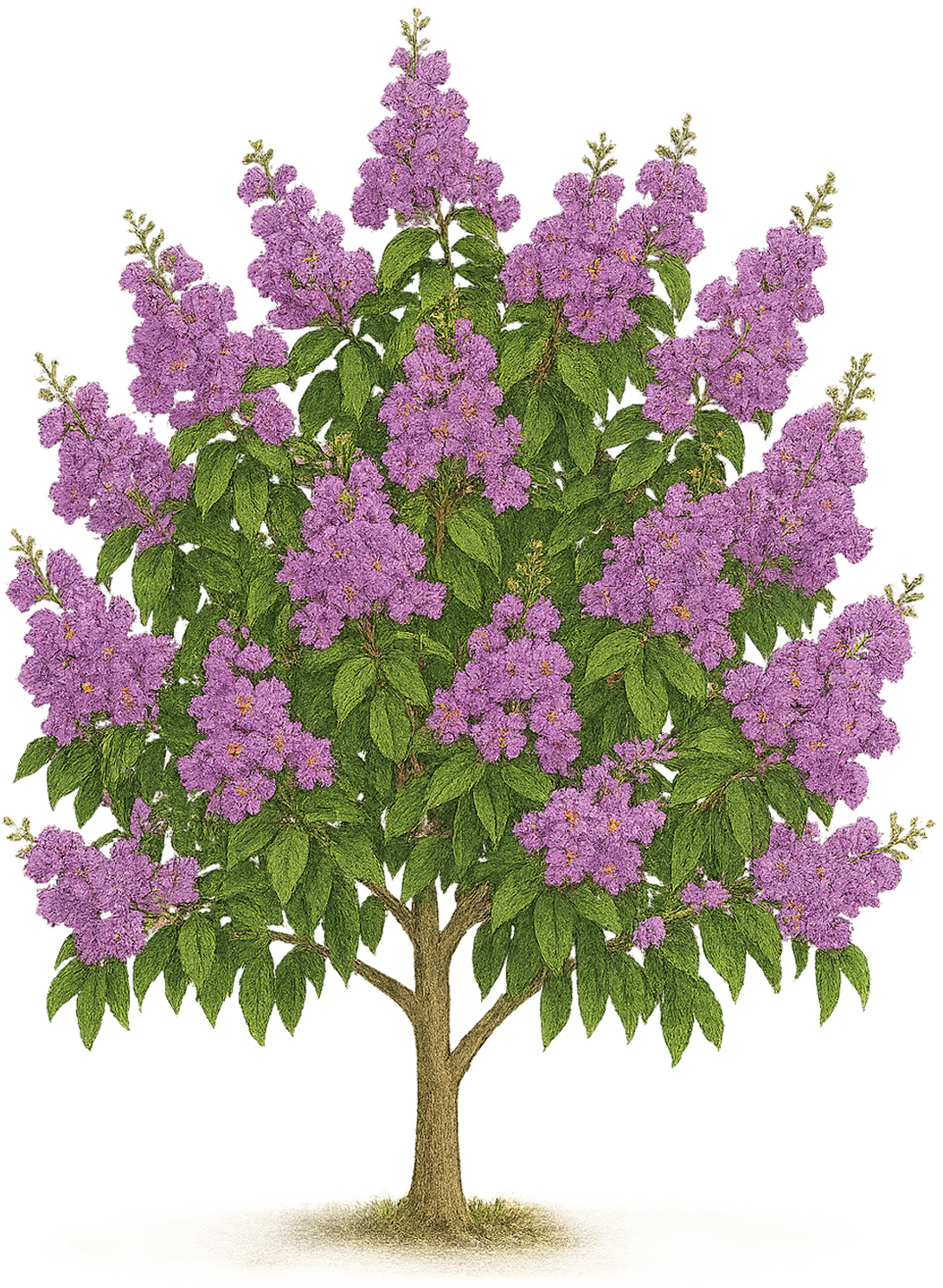
Bark: Smooth and exfoliating; used traditionally as an astringent and tonic.
Leaves: Oblong and seasonally colourful; used medicinally and for herbal teas.
Flowers & Fruit: Large, crepe-textured flowers bloom in late spring to monsoon; woody capsules with winged seeds form after flowering.
Leaves: Oblong and seasonally colourful; used medicinally and for herbal teas.
Flowers & Fruit: Large, crepe-textured flowers bloom in late spring to monsoon; woody capsules with winged seeds form after flowering.

GENERAL DESCRIPTION
Queen of Flowers is a medium to large deciduous tree growing about 10 - 20 meters tall, with a straight trunk and a wide, spreading crown. It is admired for its spectacular clusters of crinkled, crepe-like flowers in shades of pink, lavender and purple that bloom from late spring into the early monsoon. The bark is smooth and grey, peeling in patches to reveal a lighter surface beneath. Leaves are simple, opposite and oblong, turning reddish or orange before falling, which adds seasonal colour even before flowering begins. After blooming, woody, oval capsules form, containing many winged seeds. The wood is light yet durable and has been traditionally used for boats, furniture and agricultural tools.
Read more
MEDICINAL USE
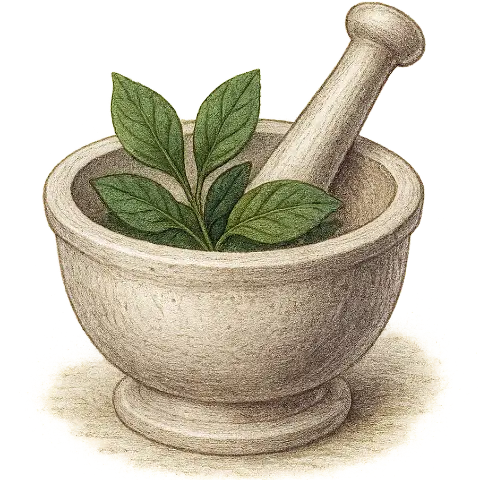
Highly valued in traditional medicine, the leaves contain corosolic acid, known to help regulate blood sugar. Leaf decoctions are used for diabetes, diarrhea and urinary tract infections. Bark and roots are used as astringents and tonics for fever, dysentery and digestive disorders. Modern studies support its antioxidant, antimicrobial, liver-protective and weight-management properties.
Read more
ECOLOGICAL IMPORTANCE
The flowers provide rich nectar for bees, butterflies and birds, supporting urban and semi-urban biodiversity. Its broad canopy offers shade and improves microclimates, while the strong root system helps prevent soil erosion. The tree adapts well to varied soils, making it useful in afforestation and watershed management projects.
Read more
CULTURAL SIGNIFICANCE
Queen of Flowers symbolizes royalty, beauty and renewal across India and Southeast Asia. It is the state flower of Maharashtra, where it represents pride and grace and appears in local art and literature. The flowers are offered in temple rituals and the tree is often planted near sacred spaces, avenues and public parks for its long blooming season and ornamental value.
Read more
HABITAT
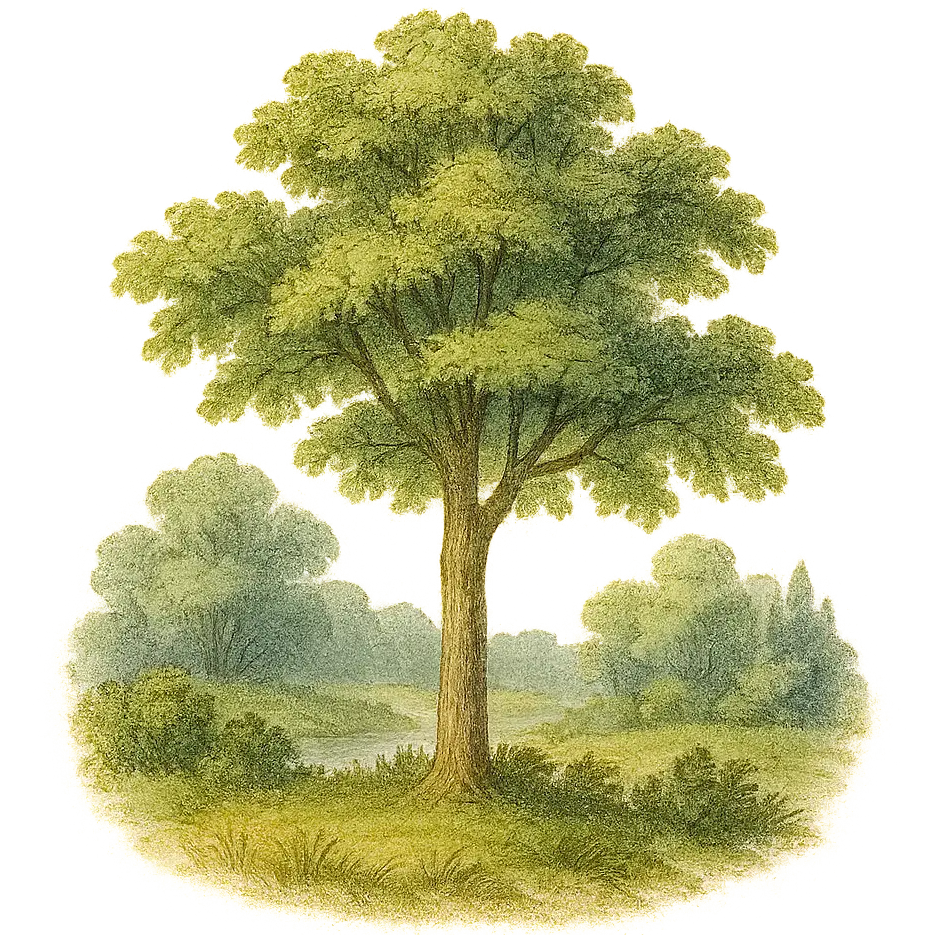
This tree thrives in warm, humid climates and grows best in moist, well-drained loamy soils. It is often planted along roadsides, riverbanks, parks and gardens for its shade and ornamental value.
Read more
CULINARY USE
The leaves are dried and brewed as herbal tea in several Southeast Asian countries, popularly known as Banaba tea. The tea is consumed for its mild taste and health benefits, especially for blood sugar control and detoxification. Young leaves are occasionally used in medicinal soups rather than regular cooking.
Read more

FOUND HERE
Pavement opposite Kavesar Garden Entrance
Read more

DO YOU KNOW?
The crinkled texture of the flowers looks like crepe fabric, which is why the tree is often called the Queen's Crape Myrtle. It is also the state flower of Maharashtra.


EARTH CHALLENGE
What makes the Queen of Flowers especially valuable in traditional medicine?