
Wodyeta bifurcata,
Arecaceae
Foxtail Palm
AKA: Wodyetia Palm
ORIGIN
Introduced
GEOGRAPHIC RANGE
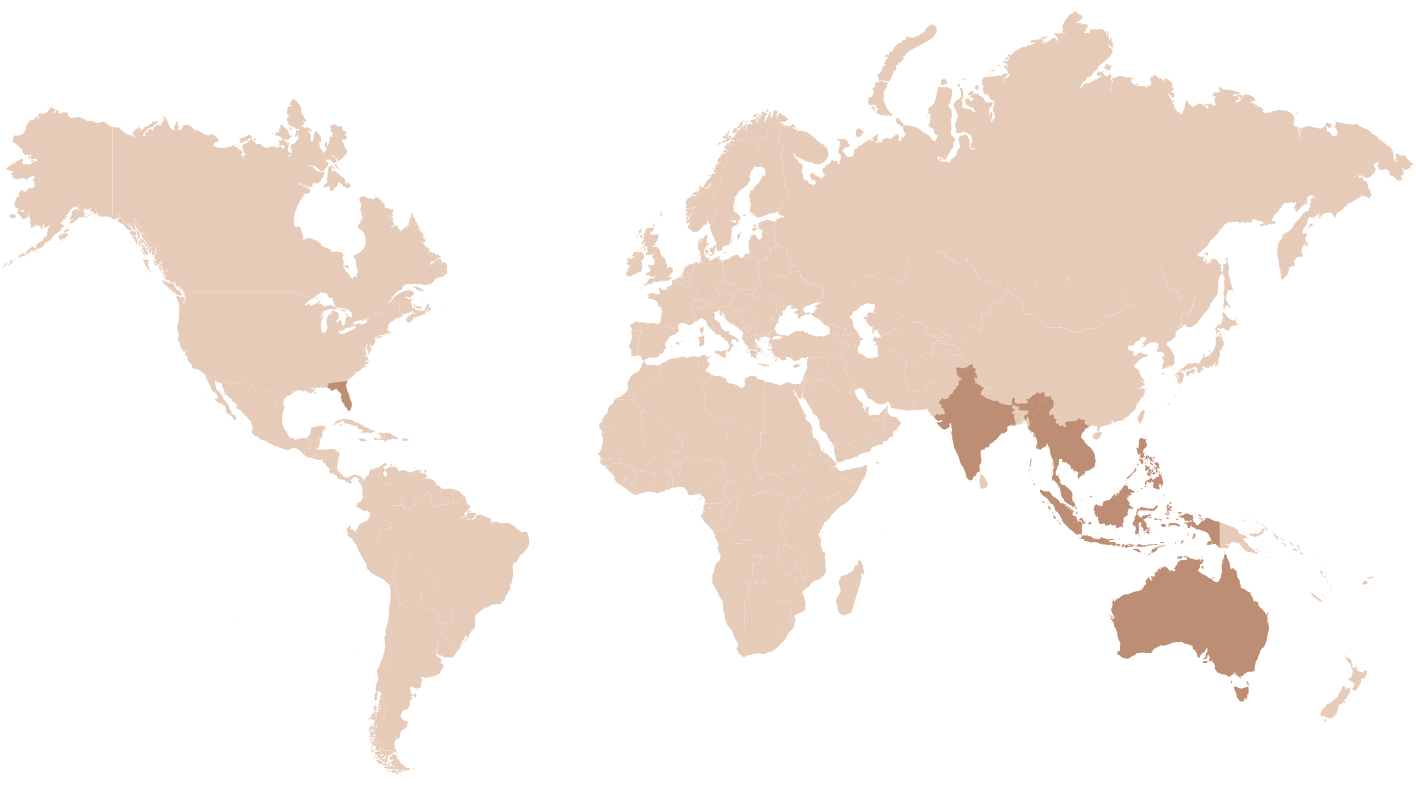
The Foxtail Palm is endemic to a small region of Queensland, Australia, specifically the Cape Melville National Park area. Due to its ornamental value, it is now cultivated in Australia, Southeast Asia, India and the United States particularly Florida.
HEIGHT
6 - 15 m

CONSERVATION STATUS
Least Concern on the
IUCN Red List
IUCN RED LIST
Established in 1964, The IUCN Red List is a critical indicator of the health of the world’s biodiversity. Species are classified by the IUCN Red List into nine groups, through criteria such as rate of decline, population size and area of geographic distribution as:
- Extinct (EX) – This species is no longer extant
- Extinct in the wild (EW) – Survives only in captivity, or through cultivation often outside native range
- Critically endangered (CR) – In an extremely critical state
- Endangered (EN) – Very high risk of extinction in the wild
- Vulnerable (VU) – At high risk of unnatural (human-caused) extinction
- Near Threatened (NT) – Close to being endangered in the near future
- Least Concern (LC) – Widespread and abundant in the wild
- Data Deficient (DD) – Inadequate information to assess extinction risk
- Not Evaluated (NE) – Has not yet been assessed
ORIGIN
Introduced
HEIGHT
6 - 15 m
GEOGRAPHIC RANGE
The Foxtail Palm is endemic to a small region of Queensland, Australia, specifically the Cape Melville National Park area. Due to its ornamental value, it is now cultivated in Australia, Southeast Asia, India and the United States particularly Florida.
CONSERVATION STATUS
Least Concern on the
IUCN Red List
BARK, FOLIAGE, FRUIT & FLOWER
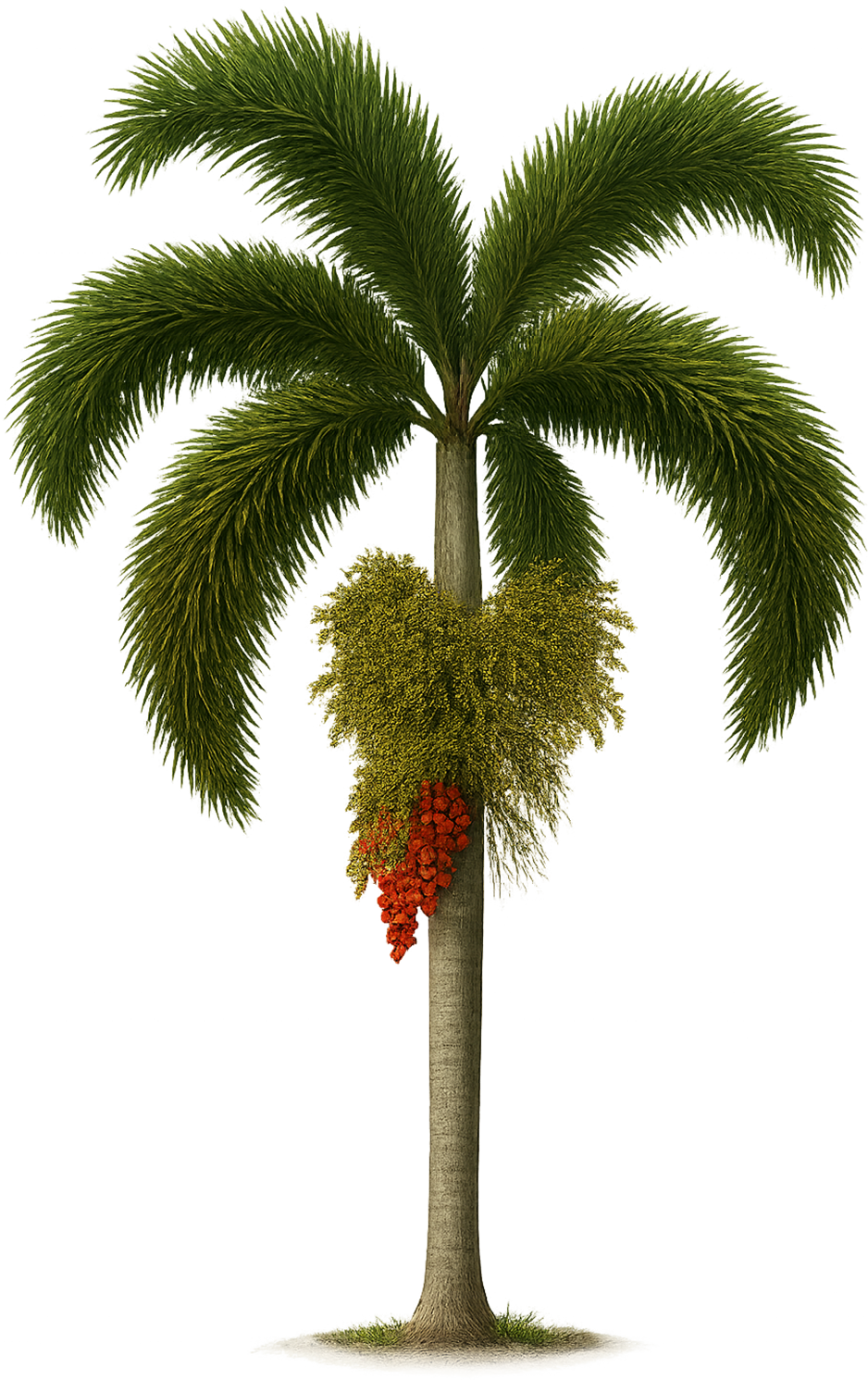
Trunk: Smooth and grey with a clean appearance, supporting the tall crown.
Leaves: Long, pinnate and densely arranged, forming the characteristic foxtail shape.
Flowers & Fruit: Inconspicuous flowers give rise to large clusters of orange to red fruits that add ornamental interest.
Leaves: Long, pinnate and densely arranged, forming the characteristic foxtail shape.
Flowers & Fruit: Inconspicuous flowers give rise to large clusters of orange to red fruits that add ornamental interest.

GENERAL DESCRIPTION
Foxtail Palm is a slender and elegant palm growing about 10 - 18 meters tall, with a smooth grey trunk and a prominent green crownshaft. It is best known for its long, arching pinnate leaves that are densely packed, giving the crown a fluffy, bushy appearance similar to a fox's tail. This unique foliage sets it apart from most other palms. The palm produces large clusters of oval fruits that ripen from green to bright orange or red, each about 5 cm long. Fast-growing and visually striking, Foxtail Palm is widely planted as an ornamental tree in tropical and subtropical landscapes.
Read more

MEDICINAL USE
Foxtail Palm is not known for any significant medicinal use. Unlike some other palm species, it is not commonly included in traditional healing systems.
Read more
ECOLOGICAL IMPORTANCE
Although primarily ornamental, Foxtail Palm contributes to urban biodiversity by providing shelter and perching space for birds and insects. Its tolerance to drought, salt spray and air pollution makes it suitable for coastal and city environments. The palm's presence in landscaped areas helps improve microclimates by providing shade and reducing heat in built-up spaces.
Read more
CULTURAL SIGNIFICANCE
Foxtail Palm has become a symbol of modern tropical landscaping and is widely used in resorts, parks, avenues and residential developments. Its discovery highlights the importance of Aboriginal knowledge in botanical science. Due to its rapid popularity and past illegal seed harvesting, it also represents the need for conservation and ethical plant trade. Today, it is valued for its low maintenance, resilience and strong aesthetic appeal.
Read more
HABITAT
The Foxtail palm thrives in tropical and subtropical regions and adapts well to coastal climates, sandy soils and urban landscaping.
Read more

CULINARY USE
The palm has no known culinary applications. Its fruits and seeds are not consumed as food.
Read more
FOUND HERE
Tennis Court Garden
Read more

DO YOU KNOW?
Foxtail Palm was unknown to science until the 1970s, when an Aboriginal man named Wodyeti revealed its natural habitat to botanists his name later inspired the genus Wodyetia.


EARTH CHALLENGE
What gives the Foxtail Palm its name?